
Juggling a Spanish debit card and a foreign one gets old fast. Curve Card promises to merge them into a single card, so you stop guessing at checkout.
Plenty of expats in Spain already tried and dropped apps promising the same thing. This one comes from a company that just got bought by a UK banking giant, which changes the calculation.
I want to walk through what changed, what still works, and where I’d hold off before committing money to a paid Curve Pay tier this year.
What Curve Card Really Is Before You Add a Single Card
Curve is not a bank account. It’s a payment layer that sits on top of the debit and credit cards you already own, issued in the UK by Curve UK Limited and across the EEA by Curve Europe UAB, which is authorized by the Bank of Lithuania.
Practically, this means one Mastercard, physical or virtual, that routes each purchase to whichever underlying card you pick in the app.
For a freelancer splitting a Spanish business account from a foreign personal one, that’s the entire pitch: stop carrying both, pick the source at the register instead.
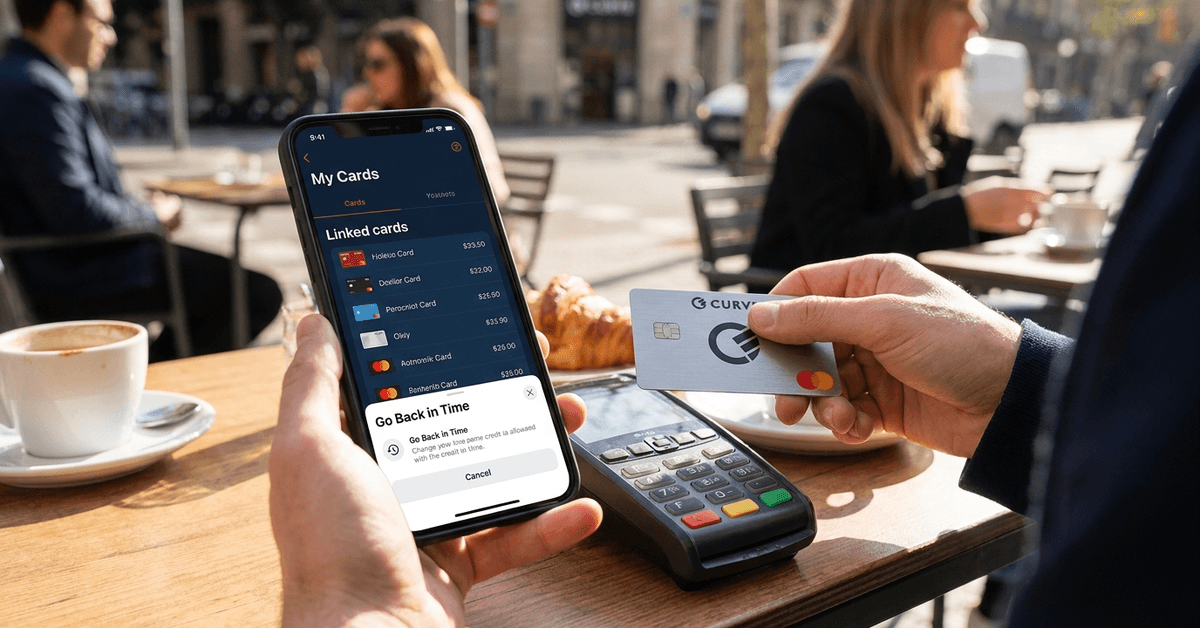
The catch that trips people up is the missing Spanish IBAN. Curve moves money between cards you already hold. It doesn’t give you a new account number for rent, nóminas, or Bizum, so it works alongside your Spanish bank rather than instead of it.
Why Lloyds’ Buying Curve Changes the Math for Spain Users
I’d think twice before signing up for an annual paid plan right now, and here’s the specific reason. Lloyds Banking Group agreed to acquire Curve in a deal worth around £120 million, roughly $160 million, with completion targeted for the first half of 2026.
The Timeline: What’s Already Happened
The announcement landed in November 2025, and it hasn’t gone smoothly. IDC Ventures, Curve’s largest external shareholder with a 12% stake, said it does not intend to support the sale and is reserving all legal rights. Curve’s own founder framed the deal differently.
“Curve’s mission since its inception has been to simplify and supercharge people’s finances”, Shachar Bialick said, describing the tie-up as a way to scale that vision through Lloyds.
What This Means If You’re Using Curve From Spain
Lloyds is a UK retail bank built around 28 million domestic customers. Once the deal completes, Curve will sit inside the group while continuing to run its existing app, cards, and rewards for current users, but the long-term integration plan clearly centers on UK mobile banking, not the Spanish or wider EEA user base.
Nobody outside Lloyds and Curve knows yet whether EEA functionality gets the same investment once the technology moves in-house.
Until that becomes clear, I wouldn’t tie up money in a twelve-month Curve Pay Pro+ subscription when the free tier still covers most everyday spending.
Curve Pay’s Four Plans in 2026: Free, X, Pro, and Pro Plus
Curve renamed its tiers to Curve Pay, Curve Pay X, Curve Pay Pro, and Curve Pay Pro+, and the gap between them is bigger than the old Blue, Black, and Metal names suggested.
| Plan | Monthly Cost | Fee-Free Spending Abroad | Go Back in Time Window |
|---|---|---|---|
| Curve Pay | Free | €250 | 30 days |
| Curve Pay X | €5.99 | €3,333 | 60 days |
| Curve Pay Pro | €9.99 | €50,000 | 90 days |
| Curve Pay Pro+ | €17.99 | €100,000 | 120 days |
The takeaway: the jump from free to €5.99 buys a lot more fee-free room than the jump from €9.99 to €17.99 does.
The Free Plan’s Real Ceiling
The free Curve Pay plan caps fee-free spending abroad at €250 a month, plus two Smart Rules and cashback offers of up to 5% on selected retailers. For someone making the occasional cross-border purchase, that ceiling rarely gets tested.
When the Paid Tiers Start to Make Sense
My take is that Curve Pay X, at €5.99, is the one tier worth paying for on principle.
It raises fee-free spending to €3,333 and stretches Go Back in Time to 60 days, which covers a full billing cycle if you need to move a purchase to a different card after the fact. You can compare the current Curve Pay plans directly before deciding.
How Fee-Free Spending Really Works Once You’re in Spain
The fee-free label comes with conditions that only show up once you’re actually spending. A few of them matter more than the marketing copy lets on.
- Weekend surcharge: currency conversion carries a small surcharge on weekends since Curve can’t lock the mid-market rate while markets are closed, versus no markup on weekdays.
- Currency limits: the fee-free allowance applies per plan tier, and spending above it triggers a percentage fee on the excess rather than blocking the transaction outright.
- Curve Fronted: routing a purchase through a linked credit card as if it were a debit purchase carries its own separate fee, so check the in-app terms before using it to pay a large bill.
None of these caveats are dealbreakers on their own. Stacked together, they mean the free plan’s fee-free spending should be tracked, not assumed.
Go Back in Time: When Switching Cards After the Fact Pays Off
Go Back in Time lets you change which underlying card paid for a transaction after the purchase already went through, within the window your plan allows.
For someone separating client-billed travel from personal spending, this solves a real problem. Book a hotel on the wrong card, then move it to the business card once the invoice is settled, all inside the 30-to-120-day window depending on your tier.
I’d treat the free plan’s 30-day window as enough for personal use. The stretch to 90 or 120 days on Curve Pay Pro and Pro+ mainly earns its keep if you’re reconciling business expenses on a quarterly cycle rather than a monthly one.
The Card Limits Curve Still Hasn’t Fixed
Curve’s biggest limitation hasn’t moved in years, and it’s worth knowing before you build a routine around the app.
Cards Curve Will and Won’t Accept
- American Express is not supported, following a long-running dispute between Curve and Amex that has never been resolved in Curve’s favor.
- Since 8 February 2023, new customers can no longer add Visa cards issued outside the UK or EEA to their Curve account. A Spanish or UK-issued Visa is fine. A US-issued Visa, added for the first time today, is not.
- Maestro, JCB, and UnionPay cards are also excluded from the wallet entirely.
For American expats living in Spain who assumed they could link a home-country Visa as a backup, this rule alone can rule Curve out before it starts.
Is Curve Card Worth It for Expats and Freelancers in Spain?
Curve suits a specific type of Spain-based reader: someone with a Spanish account for daily life plus at least one UK or EEA card they want to keep active for travel, rewards, or business separation. The single-card, multi-source routing solves a genuine annoyance for that person.
It suits fewer people than the marketing implies. Anyone relying on Curve for a Spanish IBAN, salary deposits, or Bizum transfers needs a real Spanish bank account regardless, since Curve was never built to replace one. Anyone with only one card in regular use gains little beyond a Mastercard wrapper around it.
Before signing up, check three things on Curve’s own site: the current fee-free limit for your intended plan, whether your first funding card qualifies under the UK/EEA rule, and how Curve is communicating the Lloyds transition as it nears completion.
Questions People Ask About Curve Card in Spain
Readers juggling a Spanish account and a foreign card tend to ask the same handful of questions before signing up.
- Q: Does Curve Card work for everyday spending in Spain? Yes, Curve works anywhere Mastercard is accepted, including in-store and online purchases across Spain. It won’t replace your Spanish bank account for rent or Bizum, so most people run it alongside one rather than instead of one.
- Q: Will my Curve account change once Lloyds completes the acquisition? Nothing changes automatically the day the deal closes, since Curve keeps running its existing app and cards during the transition. Watch for updates from Curve directly rather than assuming features will carry over unchanged long term.
- Q: Can I use Curve Card without holding a Spanish bank account? You need at least one funding card to link first, and it must be UK or EEA-issued if you’re a new customer. Without a Spanish or EEA card as your starting point, opening a Curve account gets harder.
- Q: Why can’t I add my American Express card to Curve? Amex blocked Curve’s access to its network years ago and the two companies never reached a new agreement. If Amex is your main card, Curve simply won’t route payments through it.
- Q: Is upgrading to Curve Pay Pro or Pro+ worth the monthly fee? It depends on how much you actually spend abroad each month against the free plan’s €250 cap. Most casual users get more value from the €5.99 X tier than from jumping straight to the higher-priced plans.
Conclusion
Curve Card solves a real annoyance for people juggling a Spanish account and a foreign card. The Lloyds acquisition adds a layer of uncertainty that older reviews never had to mention.
Start with the free plan, watch how the EEA experience holds up post-acquisition, and upgrade only once your actual spending abroad justifies it. Check Curve’s own site for the latest fees before you commit any money to a paid tier.