A freelancer collecting payments through Neteller might assume the Net+ prepaid card is the obvious next step. Load funds, tap at shops, pull cash from ATMs. Simple.
But the Neteller card has a geography problem that half the reviews online never mention. The physical card is only available to residents of the European Economic Area.
That single restriction changes who this card is for. And the fee structure changes whether it is worth using at all.
The EEA-Only Rule That Changes Everything
Every Neteller card review should open here, but almost none do. The Net+ Prepaid Mastercard can only be ordered by verified Neteller account holders who live in an authorized EEA country.
That means residents of the United States, Australia, Canada, Southeast Asia, Latin America, and most of Africa cannot get the physical card at all.
This matters because Neteller has millions of users across 200+ countries. The e-wallet works globally. The card does not.
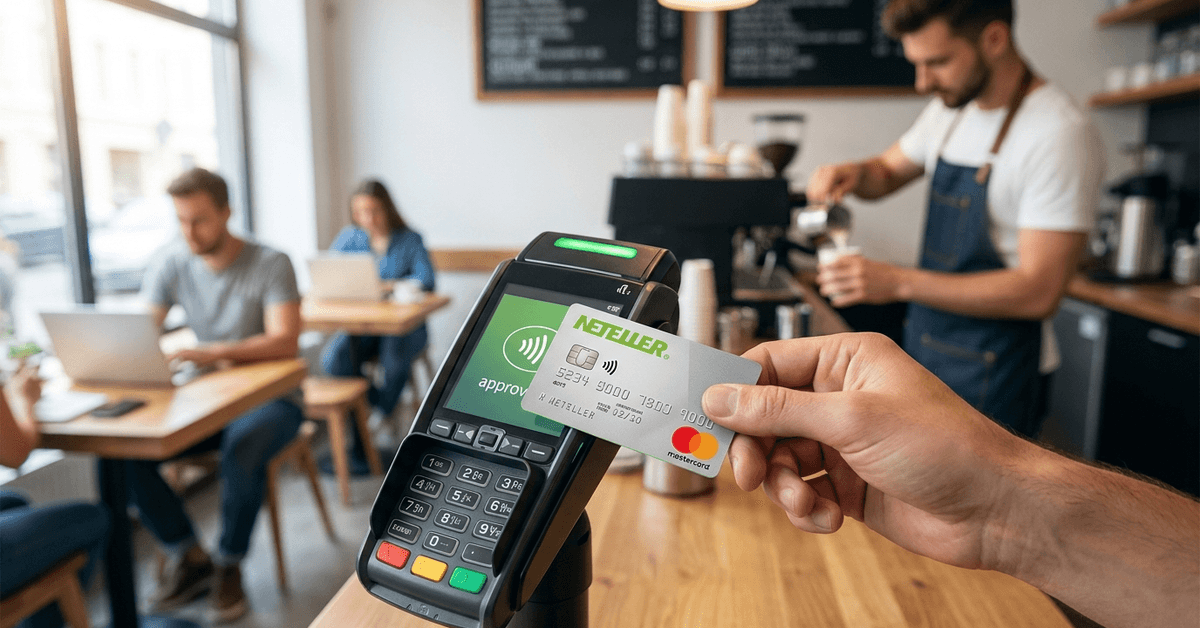
So if you landed on this page searching “Neteller card” and you live outside Europe, the product being reviewed may not be available to you. Check the Neteller fees and availability page before reading any further.
What About the Virtual Neteller Card?
The virtual card is a partial workaround. EEA residents get the first virtual Net+ Mastercard for free, and can add up to five more at €2.50 each. These work for online purchases only. No ATM access, no tap-to-pay at a coffee shop.
I think the virtual card makes more sense than the physical one for anyone whose Neteller spending is entirely online. The €10 annual fee on the physical card, combined with the 1.75% ATM withdrawal fee, starts to feel expensive if you only pull cash a few times a year.
Neteller Card Fees That Add Up Faster Than Expected
The card is marketed as a convenient way to spend your e-wallet balance offline. And it is. But the fee layer between your wallet and your purchase can stack up quickly, especially if currency conversion is involved.
The 3.99% foreign exchange fee is the big one. Every transaction made in a currency different from your card’s base currency triggers this charge. That is steep.
Wise charges around 0.5% to 1% for FX conversions. Revolut offers fee-free spending up to a monthly cap. Compared to those two, the Neteller card loses badly on cross-border spending.
The Full Fee Breakdown
Here is what the fee structure looks like across the main cost categories:
| Fee Type | Amount |
|---|---|
| Card issuance (physical) | ~€10 one-time |
| Annual card fee | €10 |
| ATM withdrawal | 1.75% per transaction |
| Foreign exchange | 3.99% per transaction |
| Merchant payments (base currency) | Free |
| Virtual card (first) | Free |
| Additional virtual cards | €2.50 each |
| Inactivity fee (no login for 6 months) | $5/month |
The inactivity fee is the one that catches people off guard. If you stop using Neteller for six months, $5 per month gets pulled from your balance until you log in or transact again.
Silver VIP Waives the Card Fee
Neteller runs a tiered VIP system. Silver VIP members get the physical card for free and pay lower FX fees.
The threshold to reach Silver is not publicly fixed, but it requires consistent transaction volume over time. Gold and Diamond VIP tiers bring the FX fee down further, but the volume needed to qualify is high enough that casual users will never reach them.
Who the Neteller Card Is Built For and Who Should Look Elsewhere
The Neteller card sits in a strange position. The e-wallet itself is popular with online gamblers, sports bettors, and certain trading platforms.
The card gives those users a way to spend or withdraw their balances in the physical world. But the user profile that benefits from this card is narrow.
Online Bettors and Casino Players in the EEA
This is the clearest use case. Gamblers who deposit and withdraw through Neteller often accumulate balances they want to spend offline.
The card lets them do that without transferring funds to a bank account first. The free merchant payments in base currency make everyday purchases painless as long as you stay within one currency.
Freelancers Receiving International Payments
Some freelancers receive client payments through Neteller, particularly those working with clients in markets where PayPal is restricted or inconvenient.
The card gives them physical access to those funds. But freelancers doing cross-border work should weigh that 3.99% FX fee against alternatives:
- Wise offers multi-currency accounts with FX fees between 0.3% and 1%
- Revolut includes fee-free card spending up to a monthly limit on paid plans
- Payoneer issues a Mastercard with a 2% FX fee and broader geographic availability
For freelancers outside the EEA, the Neteller card is a non-option entirely.
Travelers Should Skip This Card
I would not recommend the Neteller card to anyone planning to use it primarily for travel spending. A 3.99% FX fee on every purchase abroad makes it one of the more expensive prepaid cards for international use.
A $500 hotel stay in a foreign currency costs an extra $20 just in conversion fees. That adds up across a two-week trip. Cards from Wise or Revolut do the same job for a fraction of the cost.
How the Neteller Card Compares to Skrill and Payoneer
These three e-wallets compete for a similar audience: people who move money online, collect freelance income internationally, or fund betting and trading accounts.
The cards they issue share a prepaid Mastercard structure but differ on fees, access, and coverage.
| Feature | Neteller Net+ | Skrill Prepaid | Payoneer Card |
|---|---|---|---|
| Card network | Mastercard | Visa | Mastercard |
| FX fee | 3.99% | 3.99% | ~2% |
| ATM fee | 1.75% | 1.75% | $3.15 flat |
| Geographic availability | EEA only | EEA only | 150+ countries |
| Annual/monthly fee | €10/year | €10/year | $29.95/year |
| Inactivity fee | $5/month after 6 months | €5/month after 12 months | $29.95/year if unused |
Payoneer stands out on geography alone. Neteller and Skrill both limit their cards to EEA residents, while Payoneer’s card ships to 150+ countries. The FX fee gap between Payoneer at roughly 2% and Neteller at 3.99% is meaningful for anyone spending regularly in foreign currencies.
The takeaway: Neteller and Skrill are near-identical on card fees. Payoneer costs more upfront but gives you broader access and cheaper conversions.
Ordering, Activating, and Managing the Neteller Card
Getting the card is straightforward if you qualify. Log into a verified Neteller account, go to the Net+ cards section, and request a physical card.
The €10 issuance fee covers shipping and handling. Delivery times vary by country but typically take one to two weeks within Europe.
Loading Funds and Setting Limits
The card draws directly from your Neteller e-wallet balance. There is no separate card balance to manage. Any funds deposited into Neteller through bank transfer, crypto, or supported payment methods become immediately available for card spending.
Daily ATM withdrawal limits cap at 10 transactions per day, with a maximum of $1,000 per single withdrawal. Spending limits depend on your verification level and VIP tier.
Security Features Worth Setting Up
A few security settings are worth activating right away:
- Two-factor authentication on the Neteller account itself
- Card freeze and unfreeze through the Neteller app (works instantly)
- Transaction notifications for real-time alerts on spending
The app-based freeze function is fast enough to be useful if you misplace the card. Freezing locks the card immediately while you figure out whether it is lost or just buried under a couch cushion.
Questions People Ask About the Neteller Card
These are the questions that come up repeatedly and deserve a quick, direct answer.
- Q: Can I use the Neteller card outside the EEA?
The card works at any Mastercard-accepting terminal worldwide. The restriction is on ordering the card. Only EEA residents can get one. Once you have it, spending abroad works fine, though the 3.99% FX fee applies to any non-base-currency transaction. - Q: Does the Neteller card work with Apple Pay or Google Pay?
Support has been expanding, but mobile wallet compatibility varies by country. Do not assume it works in your market. Check Neteller’s support page for your region before relying on it. - Q: Is there a way to avoid the Neteller inactivity fee?
Log into your account or make any transaction at least once every six months. That resets the clock. Even a small internal transfer between Neteller users counts. - Q: Can I get a Neteller card without full verification?
No. Full identity verification is required before the card can be ordered. This includes government ID and proof of address. Expect the process to take anywhere from a few hours to a few days depending on document quality and backlog. - Q: How does the Neteller card handle refunds?
Refunds from merchants go back to the Neteller e-wallet balance, not to a separate card account. Processing time depends on the merchant, but funds typically appear within five to ten business days.
Conclusion
The Neteller card fills a specific gap for EEA-based users who already hold funds in the e-wallet. Freelancers collecting international payments and online bettors withdrawing winnings are the two groups that benefit most.
Anyone spending frequently in foreign currencies will find cheaper alternatives from Wise or Revolut. And anyone outside the EEA should look at Payoneer instead, since the Neteller card simply is not an option.