Romanian consumers are paying closer attention to travel rewards as costs rise and benefits narrow. A credit card with a miles program in Romania can offer real value when used with discipline and planning.
These cards reward spending with airline miles rather than cash back. However, interest rates, annual fees, and penalty charges determine whether miles are worth it.
This guide breaks down the strongest local options. You will see features, costs, requirements, and how to apply with clarity.
Understanding Miles Credit Cards In Romania Before You Apply
Miles cards in Romania are tied to airline loyalty programs and issued by local banks. They work like standard credit cards but convert eligible spending into airline miles.
Miles are not subject to cash and carry restrictions, which makes understanding terms essential. Interest charges, annual fees, and redemption rules shape real value.
Before choosing, you should compare the benefits against your travel habits. A good match depends on spending discipline and flight frequency.
How Miles Programs Work With Romanian Banks
Romanian miles cards partner with international airline programs such as Miles and More or Flying Blue.
Each purchase earns miles based on a fixed or tiered rate defined by the bank. Miles usually post monthly, not instantly, and depend on statement cycles. Redemption depends on airline availability and program rules, not the bank.
Some redemptions offer poor value if chosen without planning. You should always check how miles expire and when they can be used.
Key Benefits That Actually Matter To Cardholders
The main benefit is earning airline miles on everyday spending. Some cards add travel-related protections, concierge support, or premium servicing.
Premium benefits only help if you use them; they inflate costs. Introductory bonuses can boost value in the first year if you meet spend thresholds responsibly.
Using foreign currency may also earn miles, but it often includes FX charges. The real benefit appears when miles offset flights you would pay for anyway.
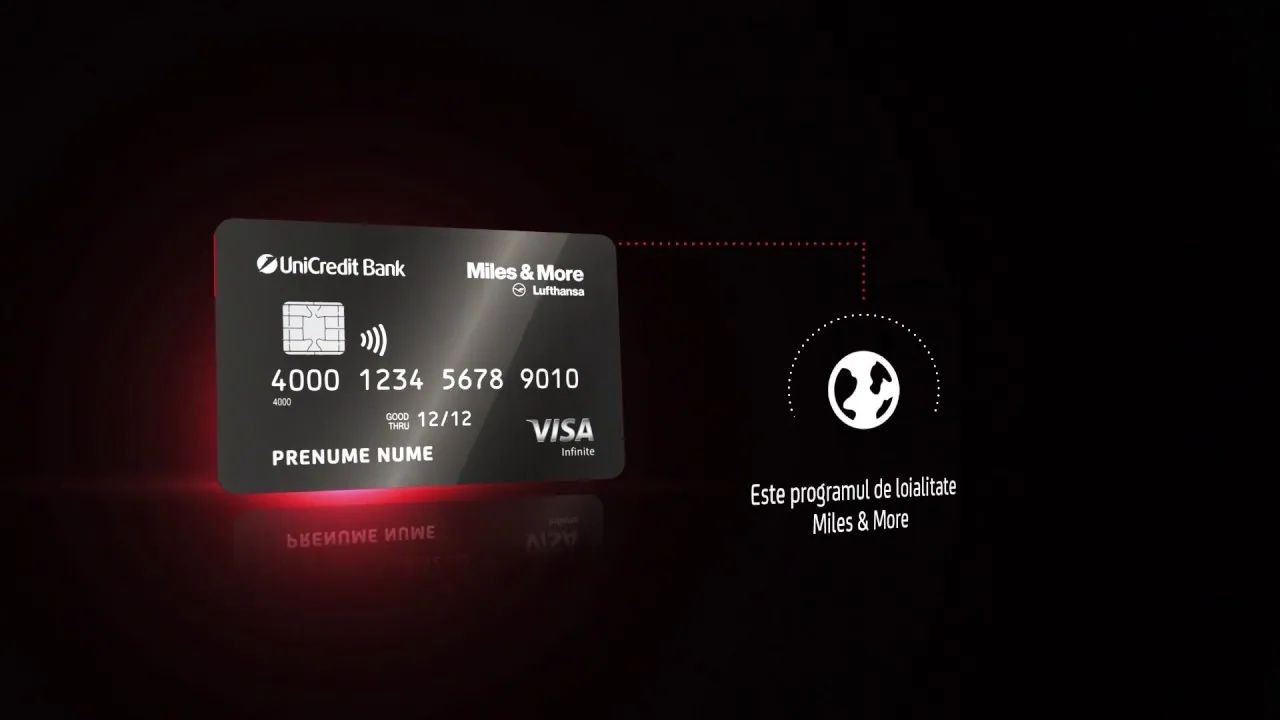
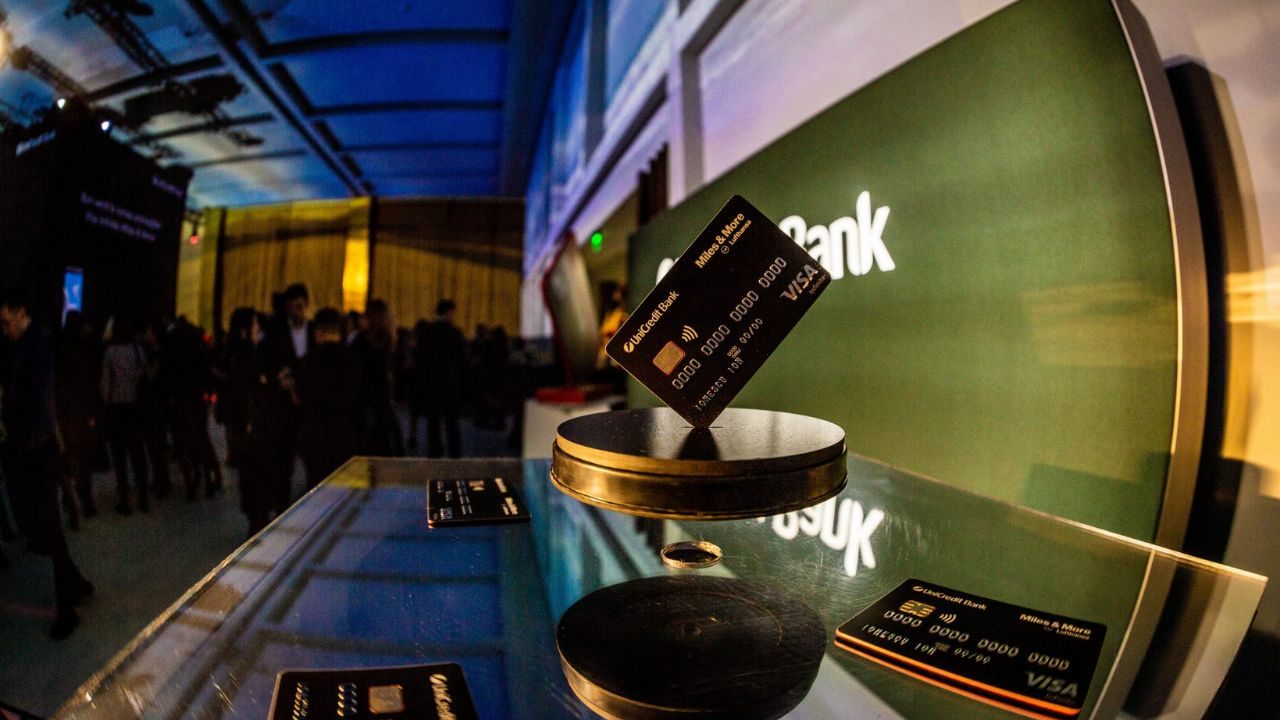
UniCredit Visa Infinite Miles & More: Premium Miles Credit Card
UniCredit Visa Infinite Miles & More is positioned as a high-end travel card. It targets customers who fly frequently within the Miles and More airline network.

This card is built for premium usage, not casual rewards collecting. The annual fee and qualification expectations reflect that positioning.
You should compare the benefits against your actual airline loyalty. For the right user, it can deliver consistent value.
Core Features And Miles Earning Structure
Cardholders earn Miles and More miles on eligible purchases, credited into the loyalty account rather than a bank wallet. Miles are credited directly to the loyalty profile, which keeps tracking simple if you already fly the network.
The premium tier typically focuses on travel convenience, servicing, and higher acceptance, rather than small discounts.
Your best use case is predictable monthly spending that you pay off on time. That keeps the rewards clean and prevents interest from wiping out value.
Exact Interest Rates, Annual Fees, And Other Charges
This card’s pricing is premium, so you should treat it like a paid travel tool with strict rules. For LEI balances, the variable interest is IRCC plus 9 percent per year, or IRCC plus 7 percent per year if conditions apply.
For EUR balances, the fixed interest is 24.99 percent per year, with a penalty add-on of plus 3 percent per year. The annual card fee is 1500 Lei or 350 Euro for the principal card, and 750 Lei or 175 Euro for a supplementary card. POS and internet transactions are listed at zero cost nationally and internationally.
Eligibility Requirements And Documents
Applicants typically need strong income stability and good credit history. Required documents usually include valid identification, proof of income, and residency verification.
Premium limits demand stronger financial profiles, which can slow approvals if your paperwork is incomplete. If you are self-employed, prepare supporting documentation showing consistent inflows.
If you have multiple income sources, organize them clearly before applying. A clean file reduces back and forth.
How To Apply, Customer Service Details, And Main Office Location
Applications can be started through UniCredit’s official channels, followed by identity and affordability checks. Always confirm pricing before submitting, so you do not commit to a high-fee product by accident.
For customer service, UniCredit InfoCenter can be reached at *2020 (Romania) or +40 21 200 2020, and the support email is infocenter@unicredit.ro.
The main office address is Bd. Expozitiei Nr. 1F, Sector 1, Bucuresti, 012101, Romania. Save these details before you travel, especially if you need fast support abroad.
Banca Transilvania Flying Blue Premium And Classic Cards
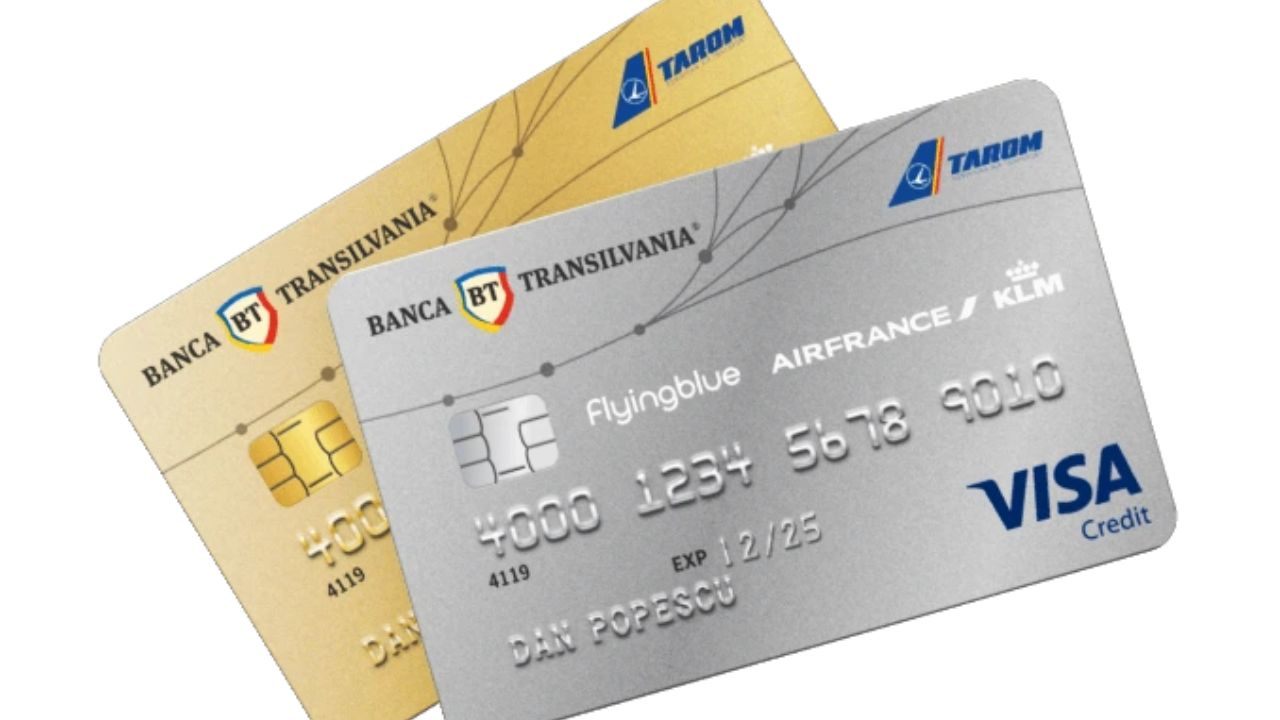
Banca Transilvania offers Flying Blue Premium and Classic cards linked to the Flying Blue loyalty program.
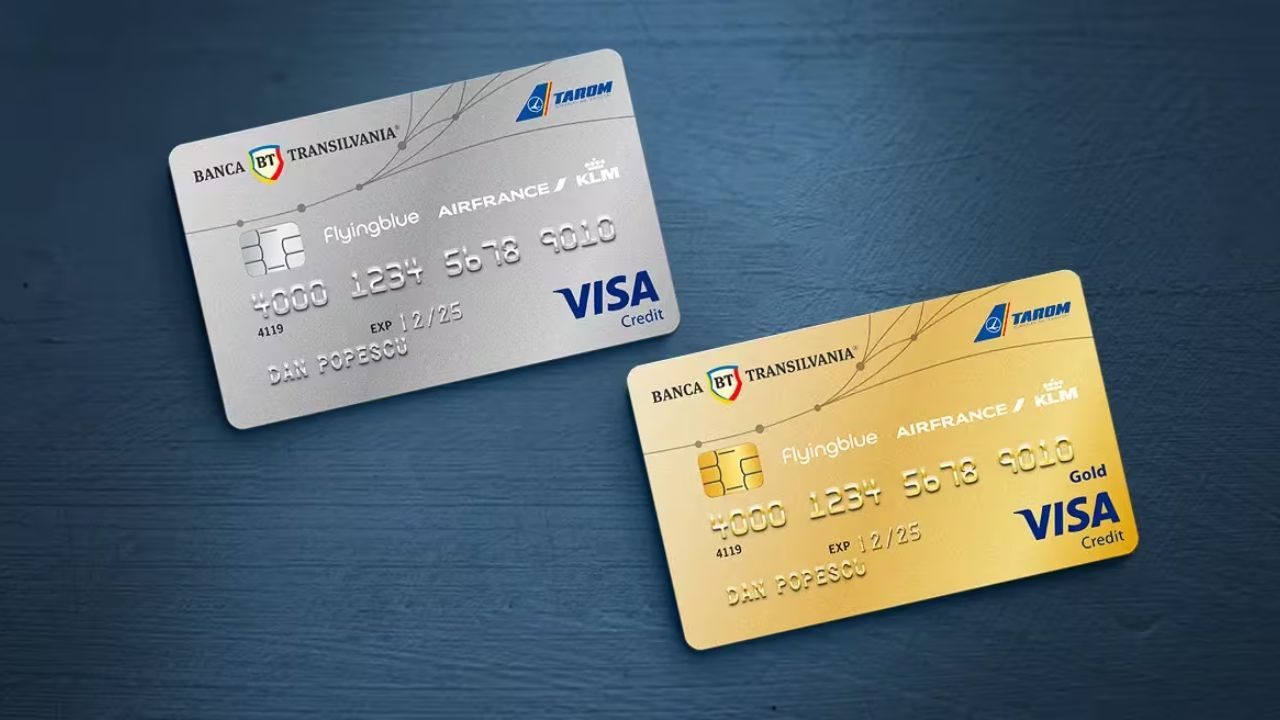
These cards target travelers who redeem through the Flying Blue ecosystem. They appeal to mid and upper-tier spenders seeking flexible redemption options.
The Premium version is positioned for heavier usage and higher service expectations. The Classic version is a lighter entry point with lower headline fees.
Miles Earning And Program Benefits
Both cards earn Flying Blue miles on eligible spending, and miles are used through the airline program rather than a bank catalogue. Redemption value depends on route and timing, not just miles balance.
Flying Blue pricing can shift with demand, so planning matters. Your best approach is to set a redemption goal early, then align spending to it.
If you redeem randomly, you are more likely to get a low value. Tracking your miles regularly helps you avoid expiration issues.
BT Flying Blue Premium: Exact Interest Rate, Fees, And Charges
BT Flying Blue Premium has higher entry costs, so you should price it like a premium product. The card issuing fee is 150 Lei per card. The annual administration fee is 200 Lei per card for the holder and 100 Lei per card for an additional user.
The fixed annual interest rate is 24 percent per year, and the published DAE or APRC example is 29.63 percent per year for a 10,000 Lei example.
BT Flying Blue Classic: Exact Interest Rate, Fees, And Charges
BT Flying Blue Classic is cheaper to start, but still requires discipline because the borrowing cost is comparable. The card issuing fee is 50 Lei per card.
The annual administration fee is 50 Lei per card for the holder, and 50 Lei per card for an additional user. The fixed annual interest rate is 24 percent per year, and the published DAE or APRC example is 27.51 percent per year for a 10,000 Lei example.
How To Apply, Customer Service Details, And Main Office Location
Applications are available through Banca Transilvania’s official channels, and follow-up requests are common during verification. Use BT’s contact options to confirm fees, limits, and how miles post so you do not rely on assumptions.
For customer service inside Romania, call 0264 308 028 or use *8028, and for calls from abroad, use the diaspora line 0264 303 003.
The main office address is Calea Dorobantilor Nr. 30 to 36, Cluj-Napoca, 400117, Romania. Keep these details saved, especially when traveling.
Choosing The Right Miles Credit Card In Romania
Selecting the best miles card depends on spending habits and travel goals. Premium cards offer stronger servicing and higher positioning, but demand higher discipline and higher fees.
Classic cards reduce entry cost but earn slower, which changes how fast you reach useful redemptions.
Fees and interest matter more than marketing promises because they are guaranteed costs. You should calculate break-even points honestly. A miles card should simplify travel, not add financial stress.
Comparing Benefits Across Cards
Premium cards may include travel adjacent services and higher-tier support. Classic cards focus on mile earning with simpler fee structures. Benefits only matter when used, not listed.
Compare the airline networks carefully because redemption convenience is your real outcome. Choose the program you actually fly with, not the one that sounds prestigious. A mismatch leads to unused miles.
Managing Costs To Protect Rewards
Paying balances in full protects reward value and keeps miles meaningful. Avoid cash advances and cash-like transactions because they can trigger immediate costs.
Foreign currency fees reduce your true return, especially when the conversion fee is a fixed percentage. Set reminders for statement dates and minimum payment dates.
If you cannot pay in full consistently, a miles card is usually the wrong product. Discipline is what makes miles feel like profit.
Application Timing And Preparation Tips
Apply when your income and credit profile are stable. Avoid multiple applications in a short window because it can create unnecessary friction in credit review. Prepare documents before starting so you do not stall on verification.
Read the fee table and penalty rules as carefully as the miles pitch. Confirm when annual fees post and how interest is calculated. You should only apply when the product matches your actual routine.
Conclusion
Miles cards can unlock value when matched to the right user. A credit card with a miles program in Romania works best for disciplined spenders who travel regularly. Interest rates, annual fees, FX charges, and penalty rules are the real risk, not miles mechanics.
Always compare total cost before rewards and use the exact fee table, not assumptions. Prepare documents, apply carefully, and track usage closely. When used correctly, miles become a benefit, not a burden.
Note: There are risks involved when applying for and using credit. Consult the bank’s terms and conditions page for more information.