
Burnout rarely shows up as one dramatic crash. More often, energy drops, patience shortens, focus slips, and the same workload starts feeling heavier than it should. An AI-Based Self-Assessment Burnout Test fits that reality because it doesn’t wait for a breaking point.
It screens for patterns that tend to build over weeks or months, then turns the results into something usable. An AI-Based Self-Assessment Burnout Test is a digital tool that measures burnout risk using established psychology questionnaires, then applies AI to interpret response patterns.
Instead of a single total score, many tools highlight specific drivers and show a burnout risk score that can be tracked over time. Results can support a personal check-in, or help teams spot trends, yet medical diagnosis still sits outside the scope.
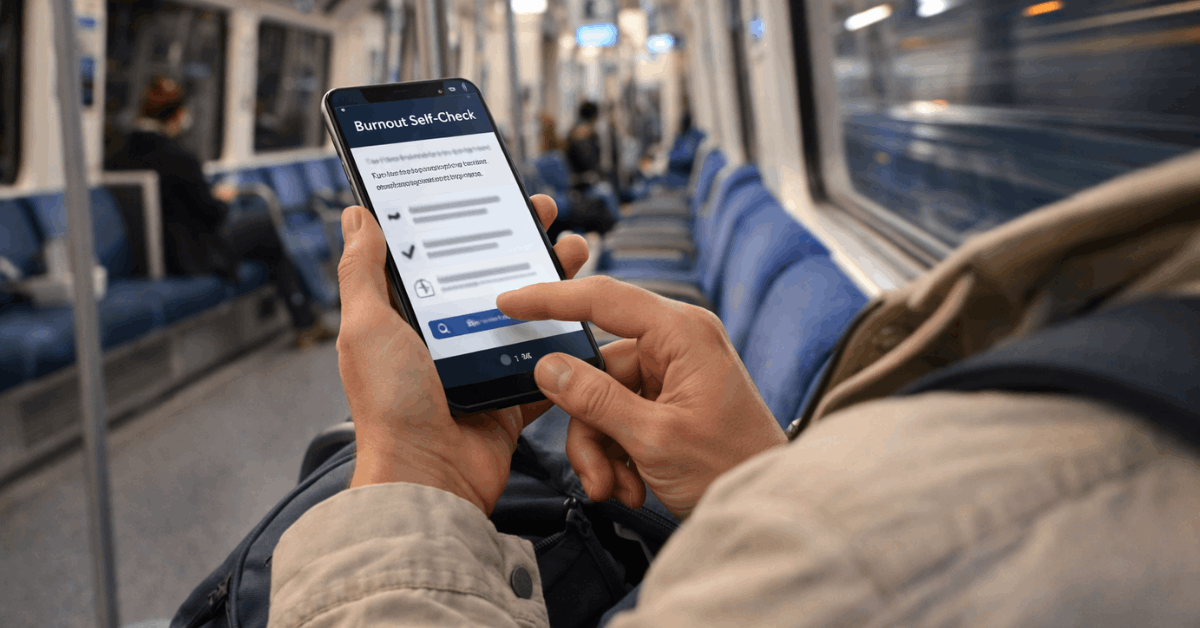
What An AI-Based Burnout Test Actually Does
A standard burnout self-check asks questions about exhaustion, detachment, and performance, then produces a score. AI-driven tools keep the questionnaire core, yet add faster interpretation and more tailored outputs.
Pattern recognition matters here. A person can be productive and still be burning out, while another person can feel fine and still be sliding into unhealthy coping. Most tools run on a short set of questions, sometimes under ten items, sometimes over thirty.
Answers usually reflect the last two weeks or month, since burnout shifts across seasons, projects, and life changes. A useful report connects symptoms to levers you can pull, such as workload boundaries, recovery time, sleep consistency, and support access.
The Models Behind The Scores
Reliable tools start with validated instruments, not random quiz questions. That matters because burnout is multi-dimensional, and quick internet checklists often collapse it into “stress.”
Validated frameworks also make results easier to discuss with a clinician, coach, or HR partner when that step makes sense.
Maslach Burnout Inventory
The Maslach Burnout Inventory is widely treated as a benchmark for workplace burnout measurement. It focuses on emotional exhaustion, depersonalization or cynicism, and reduced professional efficacy.
Many digital platforms use it as a structured base, then layer interpretation on top through automated scoring and plain-language feedback.
Burnout Assessment Tool
The Burnout Assessment Tool was developed in a research setting and is often described as more comprehensive than older approaches. It measures core symptoms such as exhaustion, mental distance, and cognitive and emotional impairment.
A digital BAT format can feel more practical than paper scoring, since the tool can surface which dimensions are driving the result, rather than leaving you to interpret raw numbers.
Oldenburg Burnout Inventory
The Oldenburg Burnout Inventory is another established scale used across research and workplace settings. It measures exhaustion and disengagement, using item phrasing designed to reduce response bias.
That balance can be helpful when someone tends to minimize symptoms or answer in a socially “acceptable” way.
What A Modern AI Burnout Test Measures
Burnout isn’t one feeling. Several dimensions move together, and an AI summary often points to the strongest signals instead of flattening everything into one label. Watch for tools that separate core symptoms from likely contributors, since that split makes follow-through easier.
- emotional exhaustion: persistent fatigue, low energy, and feeling drained after routine demands.
- mental distance or cynicism: detachment, indifference, or a “checked out” response to tasks.
- cognitive impairment: weaker concentration, slower recall, and reduced mental clarity under pressure.
- emotional impairment: more irritability, less emotional regulation, and shorter recovery after conflict.
- Reduced accomplishment: decreased confidence, lower efficacy, and a sense that effort no longer works.
Why AI Changes The Quality Of The Result
Static quizzes can flag risk, yet they often stop there. AI tools can map patterns across answers, highlight mismatches, and generate a personalized recovery plan tied to the highest-risk dimensions. That often reads like coaching guidance, not therapy, and that distinction matters.
Context Also Improves Decisions
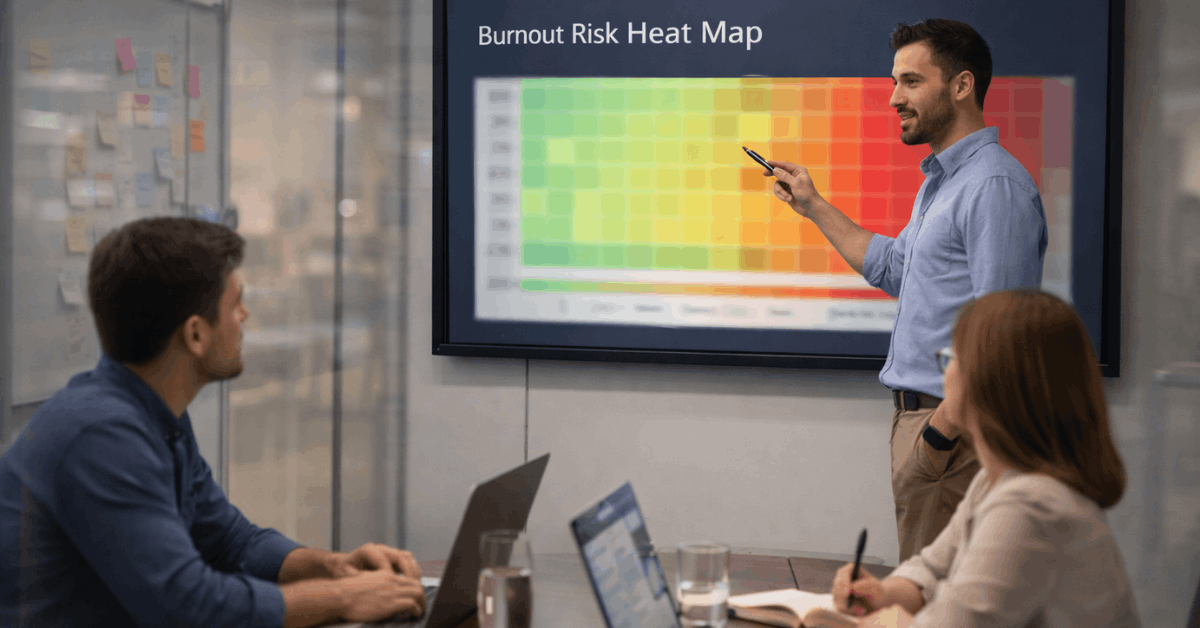
Some platforms compare your profile against aggregated, anonymized benchmarks to show where your score sits relative to other respondents. That can normalize the experience without dismissing it.
Another edge is early detection. Small shifts in energy, cynicism, or sleep can trigger a warning earlier than a person might notice, especially during deadline-heavy cycles.
Digital Life Changes the Story Too
Calendar pressure, fragmented work blocks, and constant notifications shape burnout in a different way than classic workload alone.
Tools that scan scheduling patterns and focus time often frame these as digital burnout signals, which helps link symptoms to specific behaviors like after-hours emailing or meeting overload.
Choosing A Burnout Test In 2026
Tool choice depends on what you want from the result. Some people need a fast screening snapshot.
Others need depth, a validated structure, or a report that pinpoints causes like control, fairness, or values mismatch. Strong tools make the next step obvious, since a score without a plan doesn’t change much.
Key picks that are widely discussed and commonly used include:
- TripleTen Burnout Test: a longer questionnaire that reports multiple dimensions and produces AI-guided next steps, including an action-oriented recovery outline.
- Burnout Assessment Tool formats: research-backed structure that breaks down exhaustion, mental distance, and cognitive and emotional impairment.
- MBI-based assessments: useful when a classic benchmark is needed for workplace conversations, especially around exhaustion and cynicism patterns.
- Jennifer Moss’s self-assessment: a “drivers” view that focuses on root causes like workload, control, and community, which can guide practical changes.
- The Bridge Burnout Indicator by TestGroup: a workplace-oriented approach that aims to detect overly polished answers, supporting HR use when social desirability skews results.
Calendar-based prevention tools can help, too, even if they aren’t a test. Reclaim.ai, for example, markets AI scheduling features that protect focus time and reduce meeting overload, which can reduce risk upstream rather than waiting for symptoms.
Privacy, Ethics, and When Support Becomes Necessary
Burnout data is sensitive, even when it “only” comes from self-report. Some tools now combine questionnaires with wearable signals, sleep indicators, or text analysis. That can improve detection, yet it also raises stakes around consent and storage.
Strong privacy design includes clear retention rules, device-level processing where possible, and privacy and data encryption practices that protect mood and behavior data.
Transparency Obligations for Certain AI Systems
Regulation is moving fast. European policy discussions around the EU AI Act have emphasized transparency obligations for certain AI systems, especially when users interact with AI or when AI influences decisions.
Transparency matters in a burnout context because people deserve to know what’s being analyzed, how conclusions are produced, and what data sources are used.
Practical Boundary
A practical boundary is still needed. These tools support screening and awareness, not diagnosis. A high-risk result paired with persistent sleep disruption, panic symptoms, or thoughts of self-harm calls for professional support, not more self-testing.
Medical or mental health professionals can also screen for conditions that mimic burnout, such as depression, anxiety disorders, thyroid issues, or anemia.
Disclaimer
These tests support self-assessment and screening only. Results do not constitute a medical diagnosis or a replacement for professional mental health advice.
Last Thoughts
Burnout usually doesn’t need a big, dramatic moment to be real, and that’s the point of taking it seriously early. An AI-Based Self-Assessment Burnout Test can turn vague signals into something clearer, then point to the few drivers that deserve attention first.
Treat the score like a prompt to act, not a label to live under: tighten recovery time, adjust workload boundaries, and talk to a manager, clinician, or coach when symptoms keep climbing.
Consistent check-ins help, yet safety comes first, so any mix of persistent sleep collapse, panic symptoms, or self-harm thoughts calls for professional support rather than more tools.