A freelancer on a gaming forum once asked why $500 sent through Skrill arrived as $477. Nobody answered. The $23 gap was the exchange rate markup.
Skrill has been around since 2001, originally called Moneybookers, and it still fills a specific niche in digital payments. But the niche is narrower than the marketing suggests.
If you pay for online gaming, fund a forex broker, or need a wallet accepted where PayPal gets blocked, this breakdown covers what Skrill costs and where it falls short.
The 3.99% Fee That Never Shows Up as a Fee
Every Skrill review mentions low fees. And technically, that’s half true. Opening a Skrill account is free.
Receiving funds and paying on merchant websites is free. Sending money to a bank account through Skrill Money Transfer has no fixed transfer fee. Sounds great on paper.
The problem sits in the exchange rate. Skrill earns revenue on international transfers through an exchange rate markup between 3.99% and 4.99% above the mid-market rate.
That mid-market rate is the one Google shows when you search “USD to EUR.” Skrill doesn’t give you that rate. It gives you a worse one, and the difference disappears into the conversion without a separate line item.
How the Markup Eats a $500 Transfer
If the mid-market rate is 1 USD = 0.85 EUR, Skrill might show you 1 USD = 0.81 EUR. That 4.7% gap means on a $500 transfer you lose around $23.50 before anything else is charged. Scale that to $2,000 and you’re looking at close to $100 gone.
I think Skrill’s fee structure is one of the least transparent in the digital wallet space for 2026, specifically because the 3.99% FX markup never appears labeled as a “fee” on most transaction screens.
Compare that to Wise, which breaks every charge into a visible line item before confirmation. The difference in total cost on a $2,000 corridor can be four to ten times higher through Skrill.
The Two Transfer Products Nobody Compares
This is where Skrill gets confusing. The “Skrill to Skrill” service charges 2.99% with a minimum of EUR 0.50 for peer transfers, plus the 3.99% currency conversion fee.
But the “Skrill Money Transfer” service has zero FX rate markup for international bank transfers. Two products inside the same app, wildly different pricing, and almost nobody writing about Skrill separates them.
If you’re sending money internationally, the Money Transfer option is dramatically cheaper. But the default workflow inside the app pushes you toward the wallet-to-wallet option first.
Skrill Account Fees Beyond Currency Conversion
The exchange rate markup grabs headlines, but other charges add up if you don’t plan around them.
Skrill charges a service fee of $5.00 USD (or equivalent) per month if you don’t log in or make a transaction at least once every 12 months.
That fee deducts monthly until your balance hits zero. So forgetting about a Skrill account with $60 sitting in it means losing the entire balance in a year.
Withdrawal fees depend on your method and location:
- Bank account withdrawal: 1.75%, minimum EUR 3.50
- Visa or Mastercard withdrawal: 1.99%, minimum EUR 0.99
- SWIFT withdrawal: approximately EUR 5.50
The prepaid Visa card has a $2.50 ATM fee, and a $10 application fee applies to customers who don’t meet certain criteria. Third-party ATM fees can stack on top of that.
The Inactivity Fee Trap
I’d argue the $5/month inactivity fee is Skrill’s worst feature for casual users. Twelve months without a login or transaction triggers automatic monthly deductions.
Skrill won’t charge your linked bank or card, but it will drain your stored wallet balance to zero.
If you open a Skrill account for a single purpose, like funding one betting platform, and then stop using it, that leftover balance evaporates quietly.
Who Gets the Best Use Out of a Skrill Account?
Skrill’s real audience is narrower than the company suggests. The platform shines in specific situations and falls flat in others.
Online Betting and Gaming Platforms
This is Skrill’s strongest category. Dozens of betting sites and online casinos accept Skrill where direct card payments get flagged or blocked by card issuers.
Credit card gambling transactions can trigger a “cash advance” fee from the card issuer, a fee that’s outside Skrill’s control. Using Skrill as a buffer avoids that surcharge entirely.
If you regularly deposit to gaming platforms, Skrill may be one of the smoother options. But check local regulations first, because legality varies by country.
Forex Brokers and Trading Platforms
Several forex and CFD brokers integrate Skrill as a deposit method. For traders who cycle funds between platforms, the instant Skrill-to-merchant transfer speed beats a 2-5 day bank wire.
The tradeoff is the conversion markup if your trading account uses a different base currency than your Skrill wallet.
Freelancers Paid Through Niche Platforms
Some freelance marketplaces and gig platforms offer Skrill as a payout option. Receiving money into a Skrill wallet is free, and recipients just share their registered email address instead of bank details.
That privacy layer appeals to freelancers uncomfortable sharing full bank information with new clients.
But I wouldn’t recommend Skrill as a primary freelance payment tool when Wise or Payoneer offer lower total costs on the same USD-to-local-currency conversions. The 3.99% FX markup on Skrill makes it expensive for anyone processing regular cross-border income.
Setting Up a Skrill Account: What to Expect
Registration takes less than a minute, but full functionality requires identity verification. That means uploading a government-issued ID or passport scan.
The verification process unlocks higher transaction limits and access to the prepaid card. Reaching “True Skriller” status requires downloading the app, making an eligible deposit (excluding PaysafeCard and PaysafeCash), and verifying your identity.
True Skriller status reduces fees on Skrill-to-Skrill transfers and activates the Knect loyalty program.
A few things to check on the Skrill fees page before committing:
- Deposit fees vary by payment method and country. Some methods are free; others carry a percentage charge.
- Withdrawal options and fees differ based on your region. A UK user and a Philippine user see different withdrawal methods.
- Transfer limits vary based on verification level and account history.
Skrill vs PayPal vs Wise: Quick Cost Comparison
The three overlap in function but diverge sharply on cost.
| Feature | Skrill | PayPal | Wise |
|---|---|---|---|
| FX Markup | 3.99% | ~3-4% | 0% (mid-market rate) |
| Peer Transfer Fee | 2.99% min EUR 0.50 | Varies by country | Low flat fee |
| Inactivity Fee | $5/month after 12 months | None | None |
| Gambling/Gaming Support | Strong | Limited | None |
| Prepaid Card | Yes (Visa/Mastercard) | No physical card in most regions | Yes (Visa) |
Skrill is cheaper than PayPal for most corridors. But Wise beats both on pure transfer cost. Skrill’s edge is acceptance: it works on gambling, forex, and gaming platforms where PayPal and Wise don’t.
Security and Regulation Behind Skrill
Skrill operates under regulatory oversight from the Financial Conduct Authority in the UK, the Central Bank of Ireland, and the US Treasury’s FinCEN.
It’s an e-money institution, not a bank, which means deposits aren’t covered by bank deposit insurance schemes like FDIC or FSCS.
Two-factor authentication is available and worth enabling immediately. The platform monitors transactions for suspicious activity, but user-side habits matter too: sticking to the official app, avoiding phishing links, and reviewing transaction history regularly.
Questions People Ask About Skrill Accounts
These are the questions that come up repeatedly in forums and search results.
- Q: Is a Skrill account free to open?
Opening a Skrill account costs nothing, and there’s no monthly maintenance fee for active users. The catch is the inactivity fee: $5/month deducted from your balance if you go 12 months without logging in or making a transaction. Set a calendar reminder if you plan to use it infrequently. - Q: Can Skrill be used for international money transfers?
Yes, Skrill transfers reach over 180 countries. But the cost depends on which Skrill product you use. The Skrill Money Transfer service has zero FX markup for international bank transfers, while the standard Skrill-to-Skrill wallet transfer carries a 3.99% conversion fee. Always check which option the app is defaulting to before confirming. - Q: Does Skrill offer a debit card?
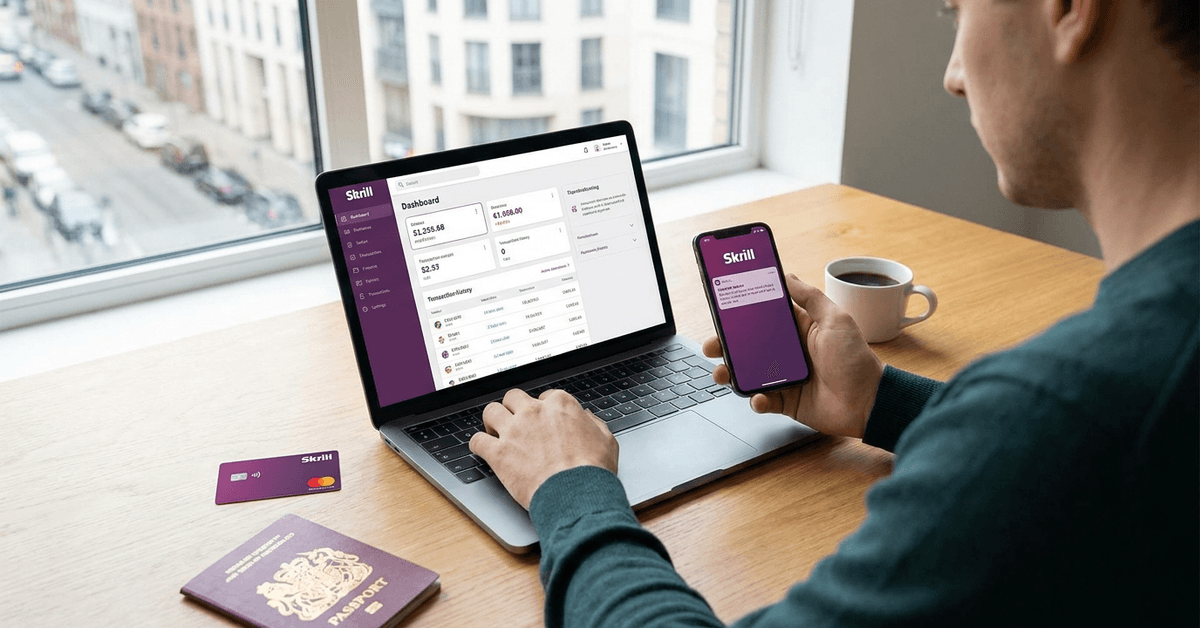
Skrill has a prepaid Mastercard (or Visa, depending on region) linked to your wallet balance. ATM withdrawals carry a $2.50 fee, and a $10 application fee may apply. The card works wherever Mastercard or Visa is accepted, but it draws from your Skrill balance, not a bank account. - Q: Is Skrill safe and regulated?
Skrill is regulated by the FCA in the UK and FinCEN in the US. It’s an e-money institution, not a bank, so your stored funds aren’t protected by government deposit insurance. Enabling two-factor authentication and monitoring your transaction history are the two strongest steps you can take. - Q: How does Skrill compare to Wise for sending money abroad?
Wise charges no exchange rate markup and shows every fee upfront. Skrill’s 3.99% FX markup can cost four to ten times more on transfers above $1,000. Skrill wins on gaming and betting platform acceptance, but for pure international transfers, Wise is cheaper across nearly every corridor.
Conclusion
Skrill fills a specific role for users who need a wallet accepted by gambling, gaming, and forex platforms. The 3.99% exchange rate markup makes it expensive for routine international transfers compared to Wise or Payoneer.
Casual users should watch for the $5/month inactivity fee that quietly drains forgotten balances. If your spending fits Skrill’s niche, it works; if it doesn’t, cheaper alternatives exist for almost every other use case.