A foreign transaction fee of 3% sounds small. Then a two-week trip turns $3,000 in spending into $3,090 of regret. That stings.
Every travel card review talks about rewards points and lounge access. Almost none focus on the one decision that drains more money than any fee: dynamic currency conversion.
Picking the right international travel card comes down to three practical questions. The answers change depending on whether you travel for two weeks or two years.
The Fee That Hits Before Rewards Even Matter
Rewards programs get all the attention. But a card charging 2% to 4% foreign transaction fees takes money out of your pocket on every single tap, swipe, and online purchase abroad.
A $5 coffee in Lisbon costs $5.20. That math repeats hundreds of times across a trip.
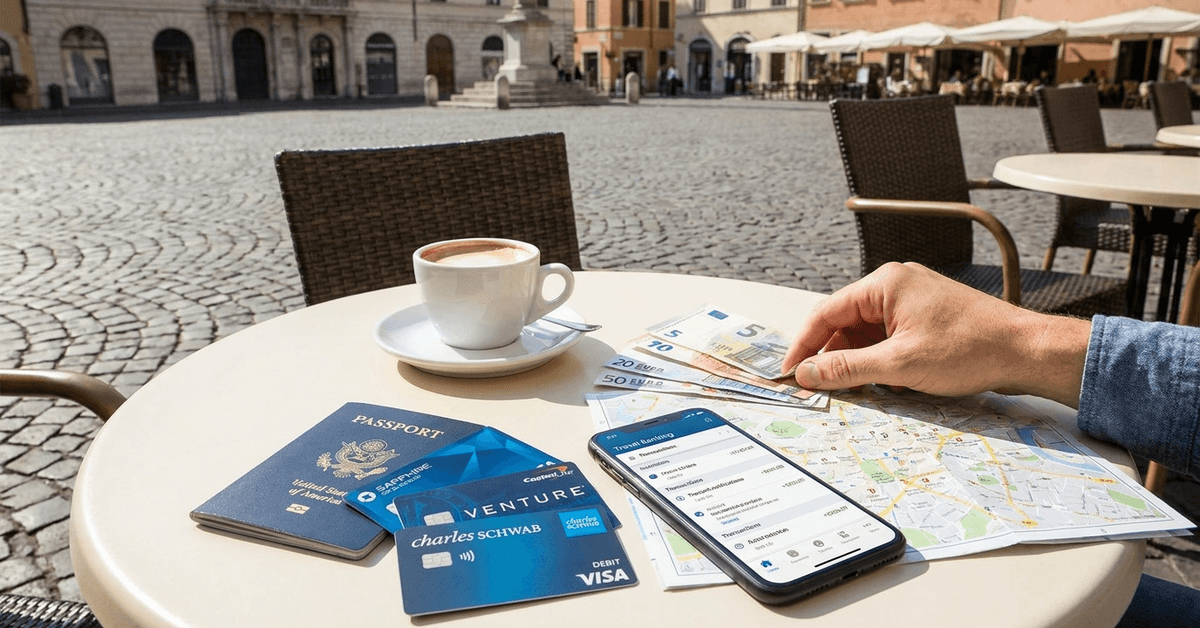
Cards like the Chase Sapphire Preferred, Capital One Venture, and most travel-specific credit cards have dropped foreign transaction fees to zero. That zero matters more than any sign-up bonus for someone spending two months in Southeast Asia.
Why Zero Foreign Transaction Fees Beat Higher Rewards
I would pick a no-FX-fee debit card like Charles Schwab or Wise over a 3x-points credit card that charges 3% per transaction. The math works against the rewards card once you factor in the fee.
A card earning 3 points per dollar at a value of roughly 1.5 cents per point gives you 4.5 cents back on a dollar. A 3% fee takes 3 cents away. The net gain shrinks to almost nothing.
The comparison flips entirely for cards that combine zero fees with rewards. A no-FX-fee credit card earning 2x points on travel purchases generates value on both sides of the equation.
ATM Withdrawal Fees and the Cash Problem
Cash still runs the show in parts of Latin America, Southeast Asia, and rural Europe. ATM fees eat into budgets fast when a card charges $5 per withdrawal plus a 1% to 3% conversion markup.
Charles Schwab’s debit card reimburses all ATM fees worldwide. Revolut and Wise offer a set number of free ATM withdrawals per month before charges kick in.
The specifics change based on your plan tier, so checking the current fee schedule on Wise.com saves unpleasant surprises at a cash machine in Buenos Aires.
Credit Cards vs. Debit Cards vs. Prepaid: Which Card Type Fits Your Travel Style
Each card type fills a different gap. The right one depends on trip length, spending habits, and how much financial control you need on the road.
Travel Credit Cards
A travel credit card does the heaviest lifting for short international trips and frequent flyers. The standard package includes:
- Zero foreign transaction fees on all purchases abroad
- Airline or hotel rewards tied to partner programs
- Chip-and-PIN or contactless payment security
- Emergency support services available globally
The downsides are real too. Annual fees on premium cards like the American Express Platinum run high, and Amex acceptance outside the U.S., UK, and Australia remains spotty. A traveler relying on Amex alone in rural Japan or Croatia will hit dead ends.
Debit Cards Built for Travelers
Debit cards appeal to budget travelers and long-term nomads who want to spend their own money without racking up credit card debt. The strong options in 2026 include:
- Charles Schwab High Yield Investor Checking: unlimited ATM fee rebates, no foreign transaction fees
- Revolut: multi-currency holding, spending controls through the app
- Wise: mid-market exchange rates, local account details in multiple currencies
The trade-off is fewer built-in protections. Debit cards pull directly from a bank account, so a compromised card creates a more immediate problem than a stolen credit card where the bank covers fraud during investigation.
Prepaid Travel Cards
Prepaid cards let you load a fixed amount in specific currencies before departure. Brands like Travelex and N26 offer this option in various markets.
These cards cap your risk to whatever balance you loaded. That appeals to cautious travelers worried about card theft. But reloading can be inconvenient in remote locations, and some prepaid cards carry hidden reload or inactivity fees.
| Card Type | Upside | Downside |
|---|---|---|
| Travel Credit Card | No FX fees, rewards, insurance | Annual fee, overspending risk |
| Travel Debit Card | ATM rebates, spend your own funds | Direct account exposure, fewer rewards |
| Prepaid Travel Card | Controlled budget, limited theft risk | Reload hassle, possible hidden fees |
The takeaway: credit cards suit short trips with high spending, debit cards fit long-term travelers and budget-conscious backpackers, and prepaid cards work as backup or budgeting tools.
Dynamic Currency Conversion: The $200 Mistake on a $5,000 Trip
I think dynamic currency conversion is the single biggest money drain that travel card articles gloss over.
A terminal abroad asks if you want to pay in your home currency or the local currency. The wording makes paying in your home currency feel safer. It costs more. Every time.
The merchant’s terminal applies its own exchange rate, which typically runs 3% to 5% worse than the Visa or Mastercard network rate. On a $5,000 trip where half the purchases trigger DCC, that adds $75 to $125 in hidden costs.
How to Avoid DCC at Terminals and ATMs
Always select the local currency when a terminal or ATM gives the option. The screen might say something like “pay in USD for your convenience.” That convenience carries a premium. Decline it.
ATMs do this too. A machine in Barcelona might offer to show the withdrawal amount in dollars. That conversion uses the ATM operator’s rate, not your bank’s. The bank rate is almost always better.
App Features That Save More Than Points Do
Locking a lost card from a phone at 2 a.m. in Bangkok matters more than earning 50,000 bonus miles. The day-to-day app features on a travel card quietly prevent bigger losses than any rewards program adds.
Instant Card Lock and Spending Notifications
Revolut, Wise, and most neobank cards let you freeze your card instantly through their app. Real-time spending notifications show every charge as it happens. A fraudulent transaction becomes visible within seconds rather than days.
Multi-Currency Wallets
Cards from Wise and Revolut allow holding balances in multiple currencies simultaneously.
A freelancer invoicing in euros, spending in Thai baht, and saving in U.S. dollars manages all three from one account. This eliminates repeated conversion fees that stack up over months.
Traditional bank cards convert everything at the time of purchase. That single conversion point works fine for a two-week vacation. Over six months of travel, the flexibility of a multi-currency wallet reduces friction and fees in ways a standard credit card cannot match.
Security Basics That Frequent Travelers Skip
Even a perfect card setup falls apart without a few precautions. These are the mistakes that create the worst travel banking headaches.
Tell Your Bank Where You Are Going
Some banks auto-detect international travel. Others freeze your card after the first foreign charge and require a phone call to unlock it. Setting a travel notice takes 30 seconds online and prevents a locked card at a hotel check-in desk.
Carry a Backup Card in a Separate Bag
A single-card strategy works until it does not. Theft, a damaged chip, or a frozen account leaves a traveler stranded without payment options. Keeping a second card in a different bag or in hotel room security covers that risk.
The combination that works for extended travel: one credit card as the primary spender, one debit card for ATM withdrawals, and both stored in separate locations. The separation matters as much as the card selection itself.
Questions People Ask About International Travel Cards
These questions come up constantly in travel forums and search results. The answers add a few details the sections above did not fully cover.
- Q: Can I use my regular bank debit card abroad?
Technically, yes. But regular debit cards from domestic banks often charge 1% to 3% foreign transaction fees plus ATM surcharges. The costs add up enough over a trip to justify a dedicated travel card, even a free one like Schwab’s checking card. - Q: Do travel credit cards work at all ATMs?
Credit card ATM withdrawals are treated as cash advances, which carry higher interest rates starting immediately with no grace period. A debit card is the better tool for cash abroad. Keep the credit card for purchases. - Q: Is American Express accepted internationally?
Acceptance varies heavily by region. Amex works well in the U.S., UK, Australia, and parts of Western Europe. Coverage drops sharply in Southeast Asia, Eastern Europe, and Latin America. Carrying a Visa or Mastercard as backup is a practical necessity if Amex is your primary card. - Q: How many cards should I travel with?
Two is the minimum: one credit and one debit. Three offers better redundancy. Going beyond three adds complexity without much safety benefit. The NerdWallet international card guide has current recommendations sorted by traveler type. - Q: Are prepaid travel cards still worth it in 2026?
They fill a narrow role. A prepaid card works as a budget cap or a backup in case your main cards are compromised. As a primary card, the reload limitations and occasional fees make them less practical than a proper travel debit card from Wise or Revolut.
Conclusion
Choosing an international travel card comes down to fees, network acceptance, and how long your trip runs. Dynamic currency conversion drains more money from travelers than foreign transaction fees in most cases.
A two-card setup covering credit and debit gives enough flexibility without overcomplicating things. Check the current fee schedules directly on each issuer’s site before applying, because terms shift faster than any review can track.