A freelancer receiving €2,000 from a European client shouldn’t have to lose chunks of it just to spend that money on groceries. That frustration drives thousands toward prepaid card solutions every month.
The Skrill Prepaid Card promises multi-currency spending, privacy from merchants, and budget control. Sounds clean on paper. The fee structure tells a different story.
So I pulled apart what Skrill charges, where the card works well, and where better options exist. This is the breakdown I wish someone had written before I started comparing prepaid Mastercard options.
How Skrill’s Prepaid Card Differs from a Regular Debit Card
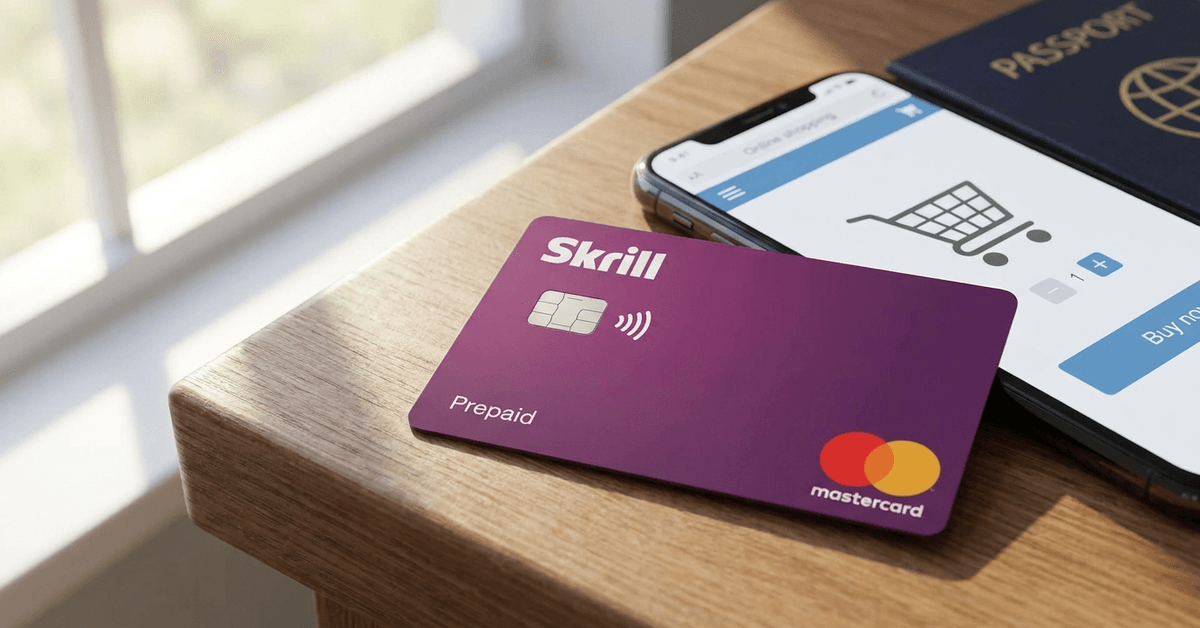
The concept is simple enough. The Skrill Prepaid Card draws directly from a Skrill e-wallet balance. Load money in, spend up to that amount, stop. There is no credit line, no overdraft, no connection to a personal bank account.
That separation is the entire selling point for people who want to keep merchant transactions away from their primary banking details. A compromised card number means a compromised prepaid balance, not a drained checking account.
Funding the Skrill Balance
Loading the Skrill wallet can happen through bank transfer, credit card, or local payment methods depending on the country.
The funding step is where the first round of fees appears: credit card top-ups often carry a percentage charge that bank transfers do not. Checking which funding method applies in your specific country matters before requesting the card.
Spending Online and Offline
Because the card runs on the Mastercard network, it works at millions of merchants worldwide, online and in physical stores.
Subscription services and recurring charges generally go through, though some merchants requiring a standard credit check may decline a prepaid card.
That rejection is rare but worth knowing about if you plan to use Skrill for something like a car rental deposit.
Skrill Prepaid Card Fees That Eat Into Multi-Currency Convenience
The multi-currency angle is what pulls freelancers toward Skrill. Loading balances in EUR, USD, GBP, and other currencies sounds like a clean way to avoid conversion charges. The problem sits in the details.
Skrill applies foreign transaction fees when converting between supported currencies. ATM withdrawals come with either a flat fee or a percentage per transaction.
An annual card fee gets charged once per year regardless of usage. And if the card gets lost, a replacement fee applies. I would skip the Skrill Prepaid Card for regular travel spending based on the currency conversion fee alone.
A Wise card converts at the mid-market rate with a transparent fee that often lands below 0.5%, while Skrill’s conversion markup tends to run higher and less predictably. The multi-currency wallet sounds equivalent, but the exchange rate math is different enough to cost a frequent traveler real money across a dozen transactions per trip.
Annual Fee and Replacement Costs
The annual fee applies whether the card sits idle or gets used daily. A replacement for a lost card adds another charge. Neither fee is unusual for prepaid cards, but both should be factored into the total cost of ownership.
ATM Withdrawal Charges
Cash access through Mastercard-supported ATMs is available. But the withdrawal fee makes it an expensive way to get cash compared to fee-free ATM networks offered by neobanks like Revolut or N26.
For a freelancer who occasionally needs local currency while traveling, those small percentages add up across a year.
The fees vary by country and chosen currency, so checking the official Skrill fees page before applying saves surprises later.
Who the Skrill Prepaid Card Can Work For
Not every prepaid card user has the same priorities. The Skrill card fits a specific kind of user better than others.
People likely to get real use from this card share a few traits:
- They receive payments through Skrill already and want to spend that balance without transferring to a bank first
- They make occasional international purchases and want a layer between the merchant and their primary account
- They treat the prepaid balance as a fixed spending budget, using the balance cap as a hard limit on discretionary purchases
The card is less useful for someone already holding a Wise or Revolut account with built-in multi-currency cards. Those products offer similar spending functionality with lower or zero conversion markups and no annual card fee.
Freelancers Receiving Skrill Payouts
This is the strongest use case. Platforms paying out through Skrill create a natural reason to keep funds in that ecosystem.
Moving money from Skrill to a bank account and then spending it through a separate card involves extra steps and potentially extra fees. The Skrill card shortcuts that loop.
Budget-Conscious Online Shoppers
Loading a fixed amount onto the card and using it for online purchases creates a spending ceiling.
If the goal is capping impulse purchases at €200 per month, loading exactly that amount and leaving the main bank card out of online checkouts does the job.
Skrill Prepaid Card vs. Traditional Bank Cards vs. Virtual-Only Cards
A side-by-side comparison helps clarify where the Skrill card sits relative to other options.
| Feature | Skrill Prepaid Card | Traditional Bank Card | Virtual-Only Cards |
|---|---|---|---|
| Global acceptance | Mastercard network | Full network (Visa/Mastercard) | Online transactions only |
| Spending limit | Prepaid balance only | Bank-approved credit line | Prepaid or linked balance |
| Multi-currency support | Multiple currencies | Limited or single currency | Varies by provider |
| Privacy from merchants | High (no bank link) | Standard (linked to bank) | High (no bank link) |
| ATM cash withdrawal | Available (with fees) | Available | Not available |
The takeaway: virtual-only cards match Skrill on privacy but fail when cash or in-store payments matter. Traditional bank cards offer higher spending power but expose your primary account to every merchant.
Registration, KYC, and Getting the Card
Signing up starts at the Skrill platform. Account verification follows standard KYC and AML requirements: identity documents and sometimes address proof. The verification window can take a day or two.
Once the account clears verification, the prepaid card can be requested. Delivery timelines depend on location.
What KYC Means for “Anonymous” Spending
A common misconception about prepaid cards is that they provide total anonymity. Skrill follows the same anti-money laundering regulations as banks. Authorities can request account details when warranted.
The privacy benefit is real at the merchant level: stores and websites see a Mastercard prepaid number instead of a bank account. But the card issuer knows exactly who holds the account.
For freelancers, any income received through Skrill needs to be reported per local tax laws. The prepaid label does not change tax obligations.
Security Practices That Protect a Skrill Prepaid Balance
The prepaid structure limits maximum exposure to whatever sits in the wallet. That built-in cap helps. But a few practices reduce risk further:
- Enable two-factor authentication on the Skrill account
- Check transaction history through the app or web dashboard at least weekly
- Only enter card details on sites using HTTPS encryption
- Contact Skrill through official channels only, never sharing card details over email or unsolicited phone calls
Keeping device software and passwords current sounds basic. It also stops the majority of unauthorized access attempts.
Questions People Ask About Skrill Prepaid Card
These come up repeatedly in forums and search queries about the Skrill card.
- Q: Can I use the Skrill Prepaid Card for recurring subscriptions like Netflix or Spotify?
Most subscription services accept prepaid Mastercard payments. The exception is merchants that run a credit check or require a non-prepaid card type, which is uncommon for streaming platforms. Keep enough balance loaded to cover the renewal date. - Q: Does the Skrill Prepaid Card work at all ATMs?
Any ATM displaying the Mastercard logo should process a withdrawal. A per-transaction fee applies each time, making it less cost-effective than fee-free alternatives for regular cash access. Check the fee schedule for your specific country before relying on ATM withdrawals. - Q: How fast does the Skrill Prepaid Card get funded after loading the wallet?
Transfers from the Skrill balance to the card are instant. The delay, if any, happens at the wallet-loading stage. Bank transfers can take one to two business days, while credit card top-ups process faster but carry a funding fee. - Q: Is the Skrill Prepaid Card available worldwide?
Skrill operates in many countries, but card availability depends on regional licensing. Some countries can access the Skrill wallet without qualifying for the physical prepaid card. Checking eligibility on the Skrill website before creating an account avoids wasted time. - Q: Can I hold multiple currencies on one Skrill Prepaid Card?
The Skrill wallet supports multiple currency balances. Spending in a currency different from the loaded balance triggers a conversion, and Skrill applies its own exchange rate plus a fee. Holding the same currency you plan to spend avoids that conversion cost entirely.
Conclusion
The Skrill Prepaid Card solves a specific problem: spending an existing Skrill balance without transferring funds elsewhere first.
Freelancers already receiving Skrill payouts get the clearest benefit from keeping money inside that system. Anyone comparing prepaid options should weigh the annual fee and conversion charges against alternatives like Wise before committing.
The card earns its place in a narrow lane, and knowing whether you’re in that lane saves both money and frustration.