
A freelancer invoice hits for €3,000. The client pays via SEPA. The money lands in seconds, no conversion, no markup, no middleman bank skimming a cut.
That scenario sounds like a fantasy if you have been using PayPal or a traditional wire. But it is exactly how a Wise account works when set up correctly.
The catch? Wise does a lot of things well, and that makes people assume it does everything. It does not. And confusing a multi-currency wallet with a full bank account can cost real money.
Where Wise Earns Its Reputation: The Mid-Market Rate
Every conversation about Wise starts and ends with the exchange rate, and for good reason. The platform uses the mid-market exchange rate on every conversion. That is the same rate displayed on Google and XE.com, with zero markup baked in.
Traditional banks rarely offer this rate. They add a spread, sometimes 1.5% to 3%, buried inside the quoted exchange rate where customers cannot see it.
On a $5,000 transfer, that hidden spread can eat $75 to $150. Wise instead charges a flat, visible fee that typically runs 0.35% to 1.5% depending on the currency pair. The fee shows up before the transaction confirms, so there is no guessing.
Wise Fees Compared to PayPal and Bank Wires
This difference compounds fast for anyone sending or receiving money internationally on a regular schedule.
PayPal, for example, charges roughly 3% to 4% above the mid-market rate on currency conversions, plus a cross-border fee. On that same $5,000 payment, the spread alone could mean $150 to $200 lost.
I would take Wise’s 0.35% conversion fee on a EUR-to-USD transfer over PayPal’s bundled rate every single month. The math is not close.
The Feature That Matters More Than Transfer Fees
Transfer pricing gets all the attention. But the part of Wise that saves freelancers and remote workers the most money is rarely discussed in depth: local account details.
A Wise account gives users local bank details in multiple currencies. That means a US routing number and account number for USD, an IBAN for EUR, sort code and account number for GBP, and BSB for AUD.
Clients in those countries can pay via domestic transfer systems like ACH, SEPA, or Faster Payments.
Why Domestic Payments Change the Math
The distinction matters because domestic transfers are often free or nearly free for the sender. A European client paying a freelancer’s Wise EUR account through SEPA pays nothing. The freelancer receives the full invoice amount. No conversion happens because the money stays in EUR inside the Wise balance.
Compare that to a traditional international wire. The sender pays $25 to $50 in wire fees. Correspondent banks along the route may each deduct their own fee. The recipient’s bank adds a receiving fee. And then the exchange rate markup hits on top of everything else.
This is the angle I think too many Wise reviews miss completely. Everyone fixates on Wise’s conversion pricing, but the biggest savings happen when no conversion occurs at all, because the freelancer held the right currency balance and gave the client local payment details.
Holding 40+ Currencies in One Account
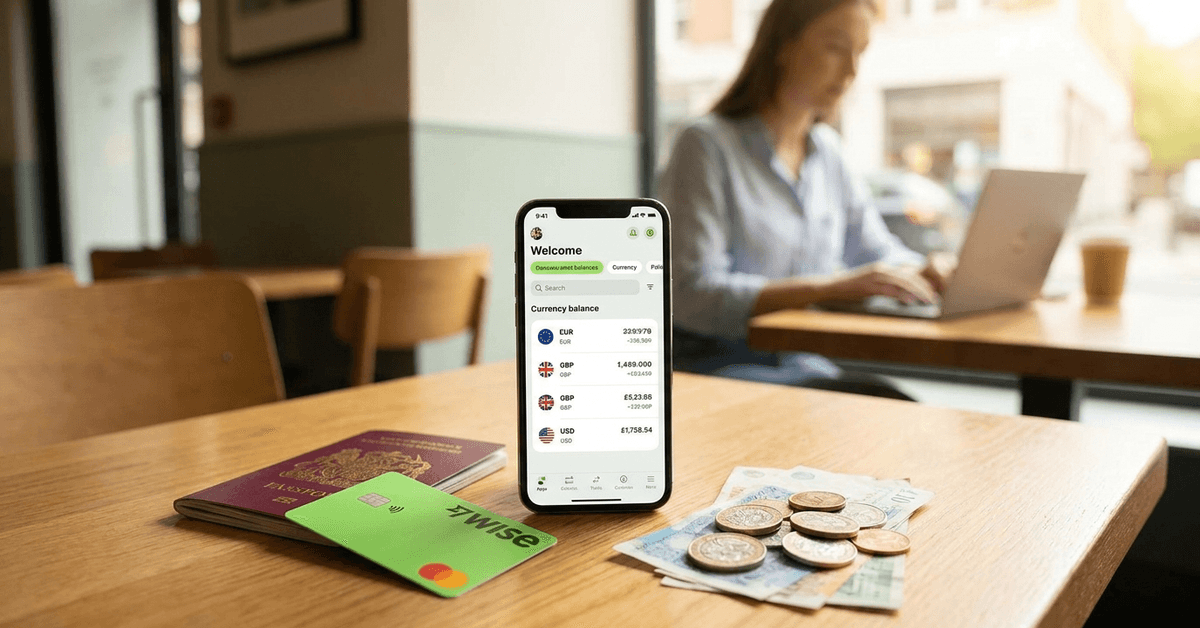
Wise lets users hold balances in over 40 currencies and spend in 49 currencies through the Wise debit card. The card is a Mastercard that converts at the mid-market rate when spending in a currency the user does not already hold.
The account setup is free. No monthly fees. No annual fees. The only cost for the debit card is a one-time issuance fee, which varies by region.
What the Wise Debit Card Covers
The card works for point-of-sale payments, online purchases, and ATM withdrawals in over 150 countries. ATM withdrawals are free up to a monthly limit (the exact threshold depends on the account region), and fees apply beyond that limit.
Spending notifications arrive instantly through the app. Freezing the card takes one tap. A virtual card can be generated in seconds for online purchases where handing over the physical card number feels risky.
Transfers Between Wise Accounts
Sending money between two Wise accounts in the same currency costs nothing. The transfer is instant. This makes Wise particularly useful for teams, partnerships, or couples managing shared expenses across borders.
Sending to an external bank account outside of Wise triggers the standard conversion fee if currencies differ. The fee structure and estimated delivery time show up before confirmation, so there are no surprises.
Wise Is Not a Bank. That Sentence Needs Repeating.
Plenty of advice floating around online suggests using Wise as a full bank replacement. I think that recommendation is careless, especially for anyone holding more than a few thousand dollars in the account. Wise is not a bank. It is an Electronic Money Institution regulated by bodies like the FCA in the UK and FinCEN in the US.
Customer funds are held in safeguarded accounts at partner institutions, separate from Wise’s own corporate money. That separation protects deposits if Wise itself runs into financial trouble. But safeguarding is not the same as deposit insurance.
For freelancers using Wise as a receiving and conversion tool, that distinction matters less. The money flows in, gets converted or spent, and moves on. For anyone treating Wise as a savings account holding $10,000 or more, the lack of government-backed insurance should be a serious pause.
| Feature | Wise | Revolut | N26 |
|---|---|---|---|
| Multi-currency balances | 40+ currencies | 30+ currencies | EUR only |
| Exchange rate | Mid-market, always | Mid-market weekdays, markup on weekends | Bank rate with markup |
| Local account details | USD, EUR, GBP, AUD + more | Limited | EU IBAN only |
| Monthly fee | None | Free tier available, paid plans for extras | Free tier available, paid plans for extras |
| Deposit insurance | Safeguarded (not FDIC unless opted in) | Varies by region | EU banking license (up to €100,000) |
| Interest on balances | 3.14% APY on USD (opt-in) | Varies by plan | Paid plans only |
N26 holds a full EU banking license, which means deposits up to €100,000 are insured. That is a real structural difference, not a marketing distinction.
Standard FDIC or FSCS protection does not apply to a Wise balance the way it applies to a checking account at JPMorgan or Barclays.
If users opt into the Wise interest feature for USD, some funds may qualify for FDIC pass-through insurance via Wise’s program bank (currently JPMorgan Chase). But this is limited and conditional.
Setting Up a Wise Account in 2026
Registration takes about ten minutes for a personal account. The process runs entirely online through the Wise website or mobile app.
Required documents include a government-issued photo ID and proof of address. Verification typically completes within one to two business days, though some users gain access to basic features immediately after submitting documents.
After verification, adding money can be done through bank transfer, debit card, or other methods depending on region. Funds convert at the mid-market rate whenever the user triggers an exchange.
Things to double-check on the official site before relying on Wise for a specific use case:
- Country-specific restrictions on which currencies can be held or received
- ATM withdrawal limits and associated fees for the user’s region
- Availability of local account details (not all currencies come with receivable bank details)
- Eligibility for the USD interest feature and its FDIC pass-through conditions
Business accounts require additional paperwork: company registration documents and proof of ownership structure.
The process takes longer, but the payoff includes features like batch payments, team access cards, and accounting integrations with Xero and QuickBooks.
Who Should Skip Wise Entirely
Wise is not a fit for everyone. A few specific situations where another option makes more sense:
- Anyone needing a mortgage, credit line, or overdraft should keep a traditional bank. Wise offers none of these products.
- Users who need in-person banking services or cash deposits cannot use Wise for that purpose.
- Residents of countries where Wise has limited functionality. The CFPB’s consumer tools page is a good neutral resource for comparing international money transfer providers.
- Anyone holding large balances long-term without opting into the interest feature is leaving money unprotected and unproductive.
Questions People Ask About Wise Account
These come up constantly in forums and search results, so here are direct answers.
- Q: Can a Wise account receive a salary or direct deposit?
The USD account details include a routing number and account number, so ACH direct deposits work. Some payroll systems may flag non-bank accounts, so it is worth testing with a small deposit first before switching full payroll. - Q: Does Wise charge for holding money without spending it?
No monthly fees and no inactivity fees. The account can sit with a balance indefinitely at zero cost. The only charges come from conversions, transfers, and ATM withdrawals beyond the free limit. - Q: How fast do Wise international transfers arrive?
About 45% of transfers arrive instantly, and roughly 80% land within 24 hours. Speed depends on the currency pair and the receiving bank’s processing time. Transfers between two Wise accounts in the same currency settle in minutes. - Q: Is Wise available for business accounts with multiple team members?
Wise Business accounts support team access with role-based permissions, batch payment uploads via CSV, and shared multi-currency balances. Each team member can receive their own debit card and choose their preferred payout currency. - Q: What happens to my money if Wise goes out of business?
Wise holds customer funds in safeguarded accounts separate from company assets. These funds would be returned to customers in an insolvency scenario, though the process may take time. Opting into the interest feature may add FDIC coverage for USD balances up to standard limits.
Conclusion
Wise handles international money movement better than almost any fintech tool available in 2026, especially for freelancers paid in multiple currencies. Treating it as a complete bank replacement, though, misreads what it was built to do.
The smartest setup pairs Wise for receiving and converting with a local insured bank for holding. That combination covers gaps that neither tool fills alone.