Optimizing sleep and brain performance using AI starts with a simple shift: stop guessing, start measuring. Modern AI systems can turn sleep into usable signals, then adapt routines and environments based on those signals.
Wearables and sensor-based platforms already track sleep stages, breathing patterns, and recovery markers at home, then translate them into practical changes.
Research from Stanford Medicine in early 2026 also showed a model called SleepFM could predict risk signals for more than 100 health conditions from one night of sleep-lab data, which hints at how information-rich sleep really is.
Why AI Sleep Tracking Changes Results
AI sleep tracking relies on machine learning trained on large sleep datasets, often benchmarked against clinical sleep studies. That matters because movement alone can’t reliably tell REM from deep sleep, or spot subtle fragmentation that ruins recovery.
Better systems combine motion with cardiovascular and breathing signals to estimate sleep architecture with greater accuracy. National Institutes of Health research has long linked sleep loss to attention and working memory problems, plus broader decision-making and mood impacts.
AI doesn’t “fix” that on its own, yet it can surface patterns that basic sleep hygiene advice misses, such as consistent REM instability after late meals or repeated awakenings after alcohol.
Set Up Wearable Biosensors The Right Way
Wearable biosensors work best when data quality stays consistent across nights. A ring, strap, or headband needs a stable wear position, clean sensor contact, and enough baseline nights for the model to learn personal patterns. Many users expect insights after one night, then get frustrated by noise.
Heart rate variability (HRV) is one of the most useful signals for recovery and stress load, since it reflects autonomic balance across sleep. Combine HRV with resting heart rate, respiration, and movement trends, then look for repeatable relationships. One clean pattern beats ten messy charts.
Build Smart Bedroom Technology That Adjusts During Sleep
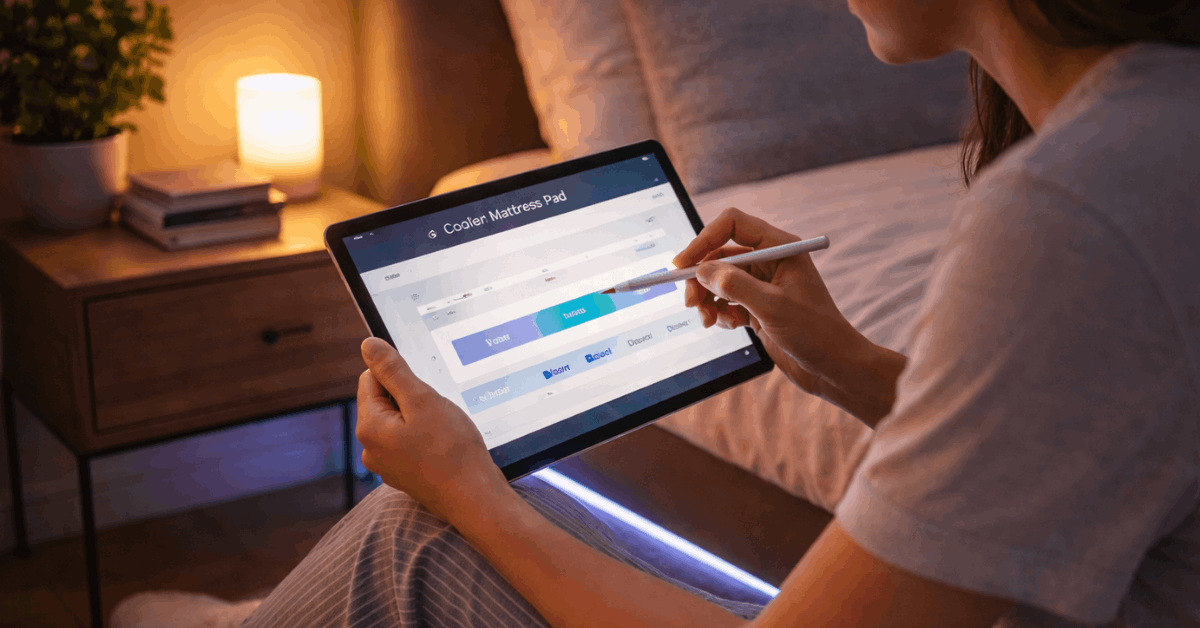
Smart bedroom technology can remove common sleep disruptors without willpower battles. Temperature is a big one, since cooler environments often support deeper sleep, while overheating increases wake time.
Systems such as AI-controlled mattress pads and connected thermostats can adjust temperature dynamically rather than relying on a single setting.
Lighting control matters too. Bright light at the wrong time can delay melatonin timing, shifting sleep onset later. A bedroom setup that dims automatically, reduces blue light exposure, and keeps wake lighting gentle can reduce late-night alertness and groggy mornings.
Use CBT-I For Insomnia and AI Coaching Carefully
CBT-I for insomnia is a structured approach that targets behaviors and thoughts that keep insomnia going, often including stimulus control and sleep restriction therapy. Digital CBT-I tools can scale this approach, personalize prompts, and adjust recommendations based on sleep data trends.
A 2025 review in the journal Sensors (MDPI) discussed the rapid growth of home sleep monitoring technologies, including apps and smart mattresses, which helps explain why coaching features are expanding so fast.
AI coaching can still backfire when it creates performance anxiety around sleep scores. A better approach treats recommendations as experiments, not rules. One variable change per week usually gives clearer answers than constant tinkering.
Improve Daytime Cognitive Performance Optimization
Daytime cognitive performance optimization gets easier once sleep becomes predictable. AI tools can estimate cognitive peaks and dips, then help place high-focus tasks when alertness is naturally higher. That matters more than squeezing extra work into low-energy hours.
Chronotype-aware scheduling uses sleep timing and circadian preference to guide when deep work, meetings, training, or creative tasks should happen.
Some platforms also blend sleep and stress signals to suggest recovery breaks, breathing drills, or short mindfulness sessions, helping concentration stay stable rather than spiky.
Compare Real-Time EEG Neurofeedback Tools and Apps
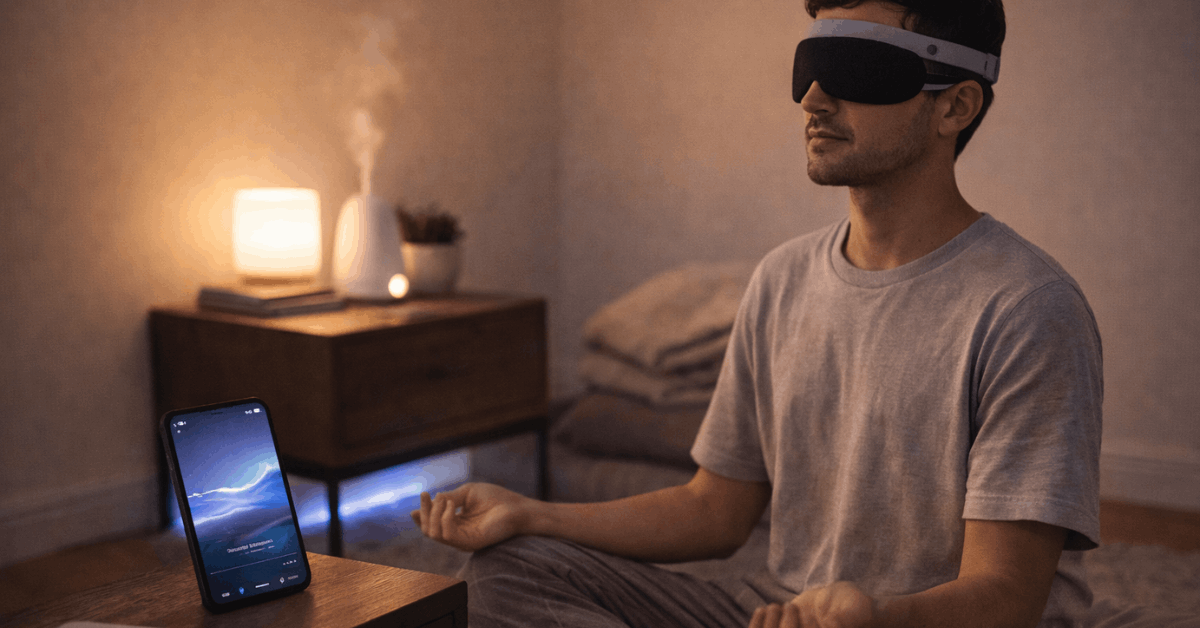
Real-time EEG neurofeedback adds a different layer because it measures brain electrical activity rather than inferring stages mainly from movement and pulse signals.
That can improve stage detection and enable guided wind-down sessions that respond to brain state. Product pages for Muse S Athena describe EEG plus fNIRS sensing, plus sleep support features designed to help users fall asleep faster and return to sleep after waking.
A quick comparison helps narrow choices without chasing every new gadget.
| Goal | Best-Fit Category | Examples Mentioned In This Brief | What To Expect |
| Sleep staging + recovery trends | Wearable tracker | WHOOP, Oura Ring | Strong trend data across weeks |
| Bedroom temperature control | Smart sleep environment | Eight Sleep-style systems | Fewer heat-related wakeups |
| Sleep induction support | EEG-based option | Muse S Athena, Elemind | Guided sessions and feedback |
| Cognitive health training | Multi-sensor headset | Sens.ai | Neurofeedback plus training modules |
| Contactless sleep monitoring | Under-mattress sensor | Sleeptracker-AI | No wearable comfort tradeoff |
Use A 14-Day Plan That AI Can Learn From
A short protocol keeps the model learning and keeps behavior changes manageable.
- Night 1–3: track only, no changes.
- Night 4–7: lock a fixed wake time, then hold it steady.
- Night 8–11: adjust temperature and light exposure, then watch sleep onset and awakenings.
- Night 12–14: add one wind-down habit, such as breath pacing or a guided relaxation track, then compare results.
Consistency is the point. Trend stability allows better recommendations than sporadic data.
Handle Data Privacy and Tech Boundaries
Data privacy deserves a hard look because sleep data is biometric health information. Reputable apps often describe security controls and compliance alignment, yet policies still vary by region and vendor.
A safer default includes strong account security, minimal data sharing, and avoiding tools that sell or repurpose sensitive data for advertising profiles. Over-reliance is another risk. Sleep optimization can turn into tech-driven stress, especially when every night gets judged.
AI should support decisions, not dominate them. Chronic insomnia, loud snoring, or breathing pauses still warrant medical evaluation, since consumer tools can’t replace clinical diagnosis.
Last Thoughts
AI sleep optimization works best when it stays practical: measure consistently, change one variable at a time, and let trends guide decisions.
A simple 14-day baseline can reveal what actually moves sleep onset, awakenings, HRV, and next-day focus, especially once temperature, light, and wind-down timing get tightened.
Privacy and boundaries matter as much as gadgets, since sleep data is sensitive and sleep scores can create stress if treated like a judgment. Stronger outcomes come from treating AI insights as experiments, while persistent insomnia, loud snoring, or breathing pauses still need clinical follow-up.