Sleep quality is more than just “how long you slept,” because restorative sleep depends on timing, continuity, and how refreshed you feel the next day.
A sleep quality AI test can combine your habits, symptoms, and (optionally) wearable data to generate a practical snapshot of your sleep patterns.
It can help you spot trends and build better routines, but it is not the same as a medical sleep study.
What “Sleep Quality” Actually Means
Sleep quality includes how quickly you fall asleep, how often you wake up, and whether your sleep feels restorative in the morning.
It also reflects how well your sleep fits your schedule, because irregular timing can reduce daytime alertness even if total hours look “fine.”
For teens, getting enough sleep is foundational, and major sleep organizations commonly recommend 8–10 hours per 24 hours for ages 13–18.
Sleep happens in repeating cycles of REM and non-REM stages across the night, which is why sleep is not a single “on/off” state.
The three pillars to measure
Duration matters because too little sleep is linked with worse health and functioning, and teens have higher sleep needs than adults.
Continuity matters because frequent awakenings and long periods awake at night can reduce how restored you feel in the morning.
Timing matters because consistent sleep and wake times support steadier daily energy and concentration.
The “gold standard” vs everyday tracking
Clinical sleep studies use sensors (including brain activity and eye movements) to classify sleep stages, which is more direct than consumer tracking.
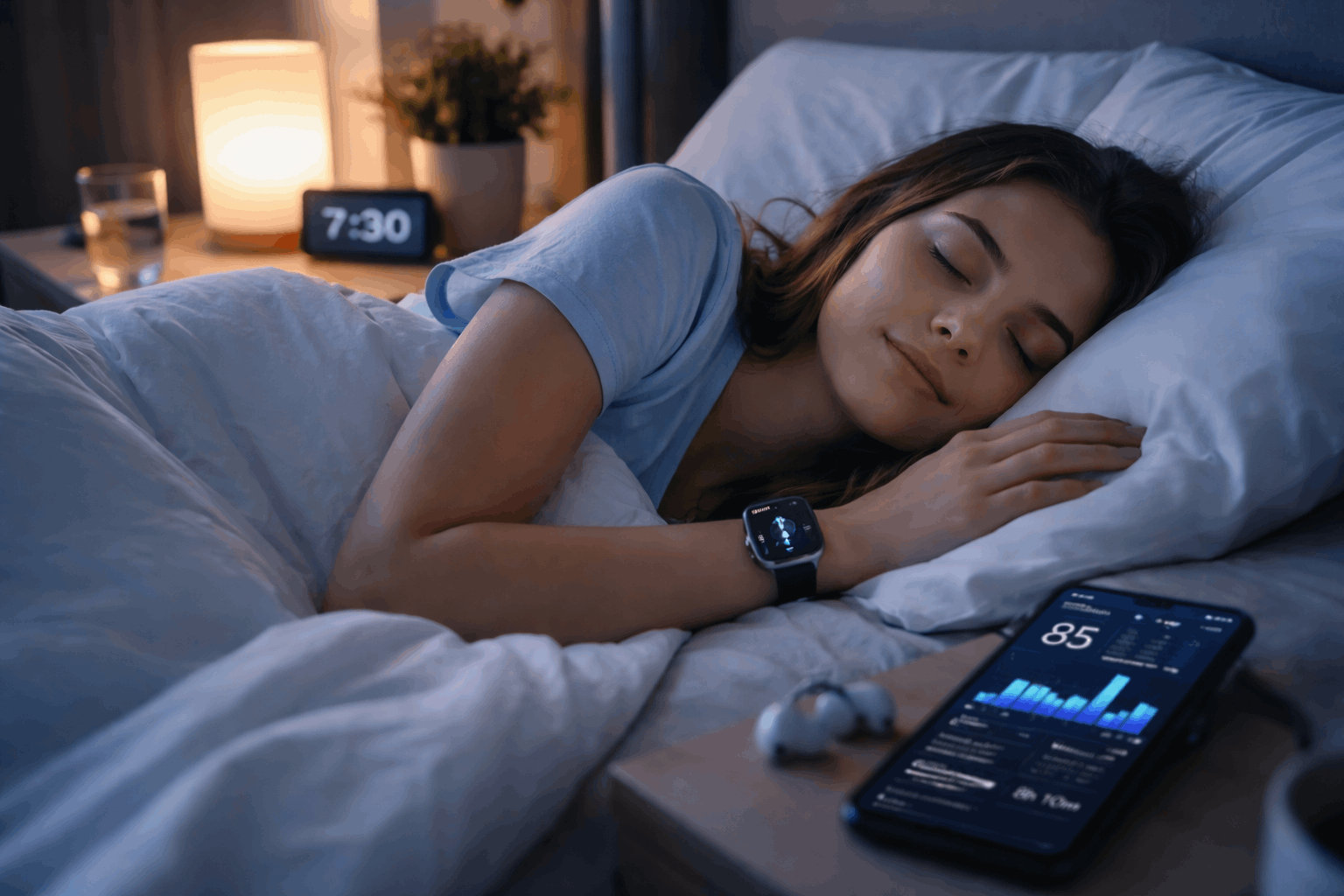
Consumer wearables usually infer sleep from movement and heart-related signals, which is useful for trends but not perfect for staging.
The American Academy of Sleep Medicine notes that consumer sleep technologies generally lack validation and FDA clearance for diagnosing or treating sleep disorders.
What a Sleep Quality AI Test Can Do
AI can summarize multiple inputs into a single score, highlight patterns, and suggest the most likely sleep “levers” to adjust first.
It can also help translate raw logs into insights, like which behaviors are most associated with short sleep or fragmented nights in your week.
AI works best when you feed it consistent data, because one-night snapshots are noisy and easy to misinterpret.
Even with good data, an AI score is still a screening tool, not a diagnosis, especially when symptoms are persistent or severe.
What data AI can use
A sleep diary can capture bedtime, wake time, awakenings, caffeine timing, exercise timing, naps, and how refreshed you feel.
Wearables can contribute estimates of total sleep time and awakenings, but you should treat stage details (like “deep sleep minutes”) as approximate.
If you track consistently, AI can detect trends such as “late bedtime drift,” “social jet lag,” or “sleep fragmentation” patterns.
What AI cannot reliably conclude
AI cannot confirm a sleep disorder on its own, because diagnosing conditions often requires clinical evaluation and sometimes lab testing.
AI cannot tell you the exact architecture of your sleep like a sleep study can, since consumer devices do not directly measure brain activity.
AI also cannot replace professional care if you have major symptoms like loud snoring with pauses, severe daytime sleepiness, or ongoing insomnia.
The 10-Minute Sleep Quality AI Test You Can Run Today
This test works best if you answer honestly and focus on patterns, not “perfect” answers.
You only need a notes app (or paper), and a wearable is optional because the diary itself is already highly informative.
If you are 13–17, compare your usual sleep to the 8–10 hour recommendation to see if duration may be a primary issue.
Step 1: Build a one-night snapshot
Write down your bedtime, your estimated time to fall asleep, your final wake time, and your out-of-bed time.
Note awakenings you remember, plus anything that might matter that day: late caffeine, a long nap, stress, heavy exercise, or late screen time.
Rate your morning refreshment from 0–10 and your daytime sleepiness from 0–10 to capture how sleep “lands” in real life.
Step 2: Turn it into a simple score
Give yourself 0–2 points for each: total sleep time (meeting your age target), falling asleep within ~30 minutes, fewer than 2 awakenings.
Add 0–2 points for timing consistency if your bedtime and wake time are close to your usual schedule, even on weekends.
Total the points (0–10) and label it: 0–3 low, 4–6 mixed, 7–10 strong, then write one sentence about why you scored that way.
Step 3: Repeat for seven days
Seven days matters because sleep cycles naturally vary night to night, so averages and trends are more actionable than single scores.
Track the same fields daily, then calculate your weekly average for total sleep time and your weekly average score.
Look for the “biggest mover,” like bedtime drifting later, waking too early, frequent awakenings, or consistent low refreshment.
How to Interpret Your Results Without Overthinking
Your score is most useful when you connect it to one or two behaviors you can actually change this week.
If your duration is short, treat that as the first priority, because many “quality” issues improve when you consistently meet sleep need.
If duration is fine but refreshment is low, focus on fragmentation, timing, stress, and sleep environment signals rather than chasing stages.
If symptoms are intense, persistent, or worsening, skip self-experiments and ask a qualified clinician for guidance.
Patterns that usually have simple fixes
If bedtime is late and wake time is fixed (school or work), your best lever is a stable wind-down routine and a consistent “lights out” target.
If you fall asleep slowly, reduce stimulating activities before bed and keep the schedule consistent so your brain learns a predictable sleep cue.
If you wake up often, check basics like room temperature, light exposure, noise, and late fluids, then see if awakenings drop over a week.
When to treat it as a “get help” signal
If you regularly cannot get enough sleep even with adequate time in bed, that can be a sign something deeper is going on.
If you have loud snoring, breathing pauses, or extreme daytime sleepiness, a professional evaluation is more appropriate than an app score.
If you have ongoing insomnia symptoms, anxiety about sleep, or significant mood changes, consider talking to a trusted adult and a healthcare professional.
Choosing AI and Wearables Safely
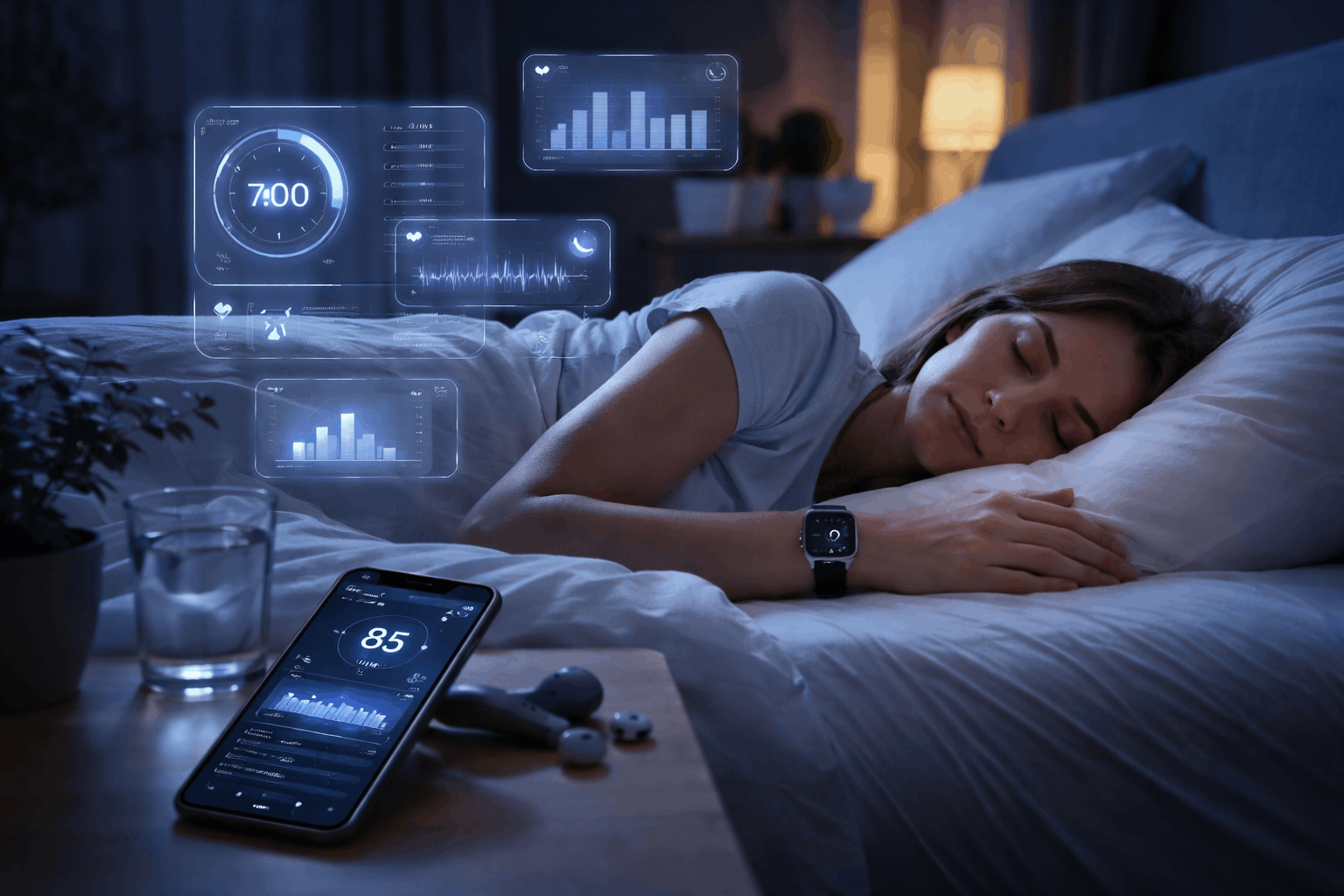
Sleep data is personal, and some apps treat it like a product, so it’s worth being selective and privacy-aware.
Use AI outputs as guidance for habits and trend-tracking, not as a definitive label about your health or your body.
Prefer tools that let you export or delete your data and clearly explain what they collect and why.
If you’re a teen, involve a parent or guardian when an app asks for sensitive permissions, accounts, or subscriptions.
Key Takeaways to Improve Your Score
A good AI sleep quality test is really a structured way to notice patterns and choose one change to practice consistently.
For teens, the first checkpoint is usually duration, since 8–10 hours is the common recommended range for ages 13–18.
Use wearables for trends, keep a simple sleep diary for context, and remember that consumer tech cannot diagnose sleep disorders.