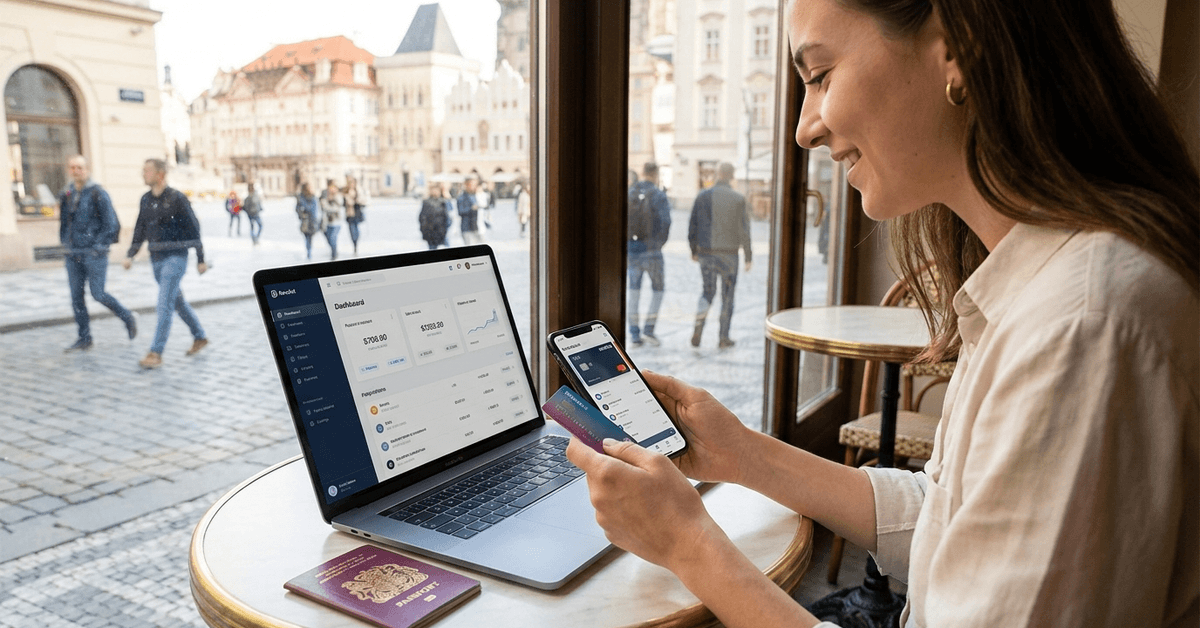
That bank account you opened during your first week in Spain, picked mostly to finish your NIE paperwork, was never chosen with the next five years in mind.
Switching banks in Spain feels unnecessary right up until fees climb, the app stops keeping up, or a support call goes nowhere for the third time.
This guide breaks down what separates Spanish banks in 2026, when a switch pays off, and where the process gets messier than expected.
Why Your First Bank in Spain Probably Wasn’t Built to Last
Plenty of people in Spain never revisit the bank account they opened in their first month.
Paperwork felt urgent then, so the choice was quick, and convenience won. Years later, that quick choice rarely still fits: your income changed, your Spanish improved, and your expectations for an app grew along the way.
The Monthly Fees That Creep Up Without a Warning Email
Banks revise their charges often, and rarely with a call to explain why. Monthly maintenance costs, ATM fees outside the network, and transfer charges can rise quietly over a year or two.
Checking your last few statements now might turn up costs you stopped noticing months ago.
What a Banking App Should Let You Do in 2026
Some Spanish banks built real budgeting tools and instant spend tracking into their apps. Others still feel like a scanned PDF with buttons stuck on top.
If blocking a lost card instantly or opening a savings goal from your phone matters to you, judge the app on those actions, not on how polished the home screen looks.
When Slow Support Turns Into a Real Dealbreaker
A hotline that loops you through three menus before a human answers gets old fast. So does an email chain that takes a week per reply.
My take is that phone support quality decides more than people admit before they switch, since Spain’s banking ombudsman system exists precisely because so many disputes never get resolved through a hotline alone.
What Separates One Spanish Bank From Another
Deciding what matters starts with knowing what to measure, since two banks that look nearly identical on a homepage can differ everywhere it counts.
Account fees, branch and ATM reach, the actual usefulness of the mobile app, support quality, and language support for contracts and statements all shift the comparison in different directions depending on your situation.
The Fee Checklist Worth Running Before You Switch
A number of “free” accounts in Spain come with conditions attached, like a minimum salary deposit or a set balance requirement. Pull up your last three statements and check them against this list before assuming your current bank is competitive:
- Monthly account maintenance charges
- ATM withdrawal costs outside your bank’s network
- International transfer fees
- Card issuance or renewal charges
- Fees for handling transactions inside a branch
Add these up over twelve months and the total sometimes surprises people who assumed their account was free.
Branch Access Still Matters More Than Digital Fans Admit
Mobile banking keeps expanding, but cash still shows up constantly in everyday transactions across Spain. If you live somewhere without a dense ATM network, a bank with a real physical presence nearby can save real time.
Language support belongs in this comparison too: contracts, statements, and helpdesk chats in your language aren’t guaranteed just because a bank operates inside Spain.
Traditional Spanish Banks vs Online Banks: Which One Fits How You Bank
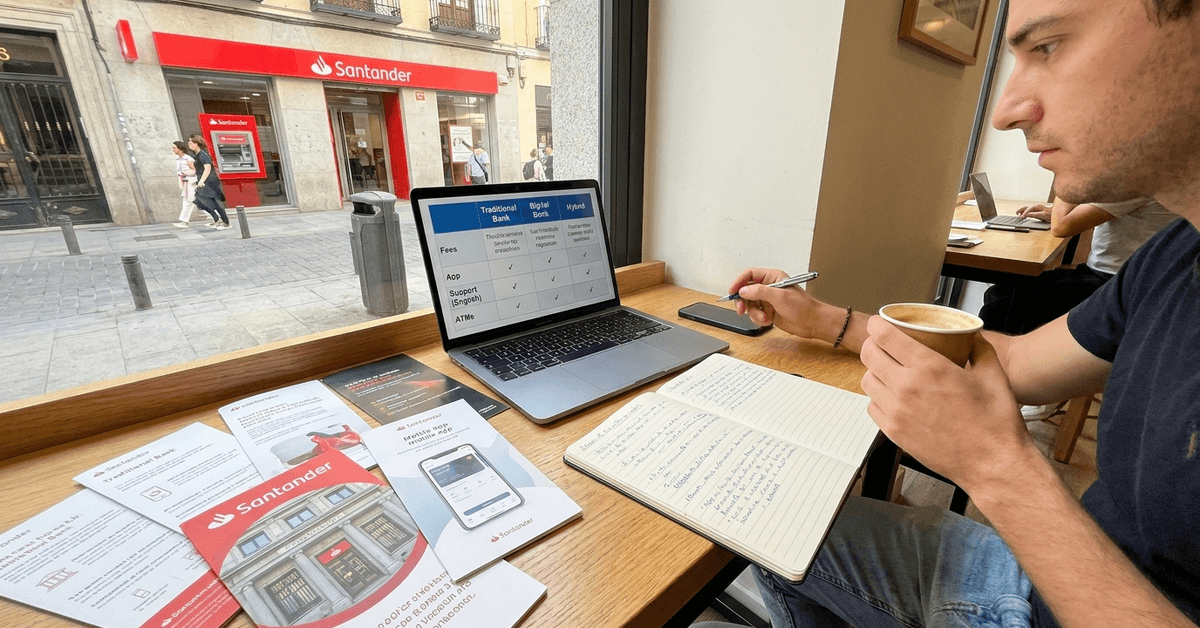
Both models now compete for the same customers, and each comes with tradeoffs a homepage rarely spells out. Traditional banks lean on physical presence and in-person advice, while online banks lean on lower costs and faster software updates.
| Factor | Traditional Banks | Online Banks |
|---|---|---|
| Branch and ATM access | Wide network, in-person help | Limited or none |
| Fees | Often higher account fees | Frequently free current accounts |
| Speed of account opening | Can involve paperwork and waiting | Usually opens within a day |
| Personal advice for mortgages | Available in-branch | Rare or handled by chat |
The better fit depends on how often you expect to need a human across a counter during a normal month.
My take is that ranking banks by branch count is outdated advice for a lot of people living in Spain, since Banco de España‘s own deposit guarantee scheme protects your money the same way whether you bank with a five-branch cooperative or a national chain with hundreds of locations.
Branch count tells you about convenience for cash errands. It says nothing about how protected your balance actually sits if the bank runs into trouble.
When a Hybrid Setup Beats Picking a Side
A number of Spanish banks now blend both models: full apps paired with a smaller network of physical counters for the moments that need a signature in person.
If you want low fees most of the year but occasional in-person help for a mortgage application, a hybrid account can cover both without forcing a tradeoff.
What Happens When You Switch, and Where It Gets Messy
Spanish regulations require banks to help move your direct debits and recurring payments once you give permission. That doesn’t mean the process runs without a single hiccup, and a few specific moments are where people get caught off guard.
Standing orders and subscriptions usually transfer automatically, though checking them against your last few statements can catch a forgotten membership before it causes a problem. Updating your salary or pension deposit is normally simple too, though delays do happen. I was surprised how often the cause traces back to something as small as a name that doesn’t match exactly between payroll records and the new account, which is enough to stall a transfer for days.
Closing the old account brings its own risk. Some banks apply closing fees or a waiting period, and leftover direct debits can push a supposedly empty account into overdraft right before it closes for good.
The Paperwork Spanish Banks Always Ask For
Spanish banks ask for formal identification and proof of address before opening most accounts, and missing paperwork is one of the common reasons expats get sent back for a second visit. Have these ready before your appointment:
- Valid passport or national ID
- NIE certificate or residency card
- Proof of address, such as a rental contract or utility bill
- Proof of income or employment, if requested
Perks, Regulation, and Security Worth Checking Before You Sign
Fees and branches aren’t the whole picture. A handful of smaller features and legal protections can matter just as much once you’re comparing two accounts that otherwise look nearly identical.
A few extras show up often enough to ask about directly:
- Cashback on groceries or online purchases
- No-fee or low-fee cards for spending abroad
- Instant notifications for every transaction
- Joint budgeting tools for shared accounts
- Dedicated account types for students or non-residents
What Protects Your Money if a Bank Runs Into Trouble
Every account in Spain falls under supervision from Banco de España, and most major banks take part in the national deposit guarantee scheme that protects customer funds up to a set limit.
Opening a new account usually means confirming your tax residency too, and anyone with financial ties outside Spain should have that conversation with an accountant rather than guessing.
Two-factor authentication and fraud monitoring are close to standard now, though how fast a bank notifies you of suspicious activity still varies between providers. If a dispute does happen, Spain’s consumer protection system offers a path forward, even though the process moves slower than most people would like.
Where to Check the Real Numbers Before You Move Your Money
A handful of sources make comparing Spanish banks easier than guessing from advertising pages alone.
OCU and FACUA both track bank fees and complaints in more detail than a single blog post ever could, and checking their published comparisons before switching takes less time than calling three branches yourself.
Forums and expat groups add something official sources can’t: real timelines from people who went through the same switch recently.
Questions People Ask About Switching Banks in Spain
A few questions come up constantly once someone starts comparing accounts, so here are quick answers to the ones that matter most.
- Q: How long does it take to switch banks in Spain? Most of the paperwork moves within a couple of weeks once you give your new bank permission to migrate direct debits. Closing the old account can take longer if it carries a waiting period or an outstanding fee.
- Q: Can I open a Spanish bank account without an NIE? Some banks allow it using a passport and proof of address, though options narrow quickly without an NIE. Checking directly with the bank before an appointment saves a wasted trip.
- Q: Do online banks work well for someone who still needs cash often? They can, as long as a nearby ATM network exists for withdrawals and deposits. If cash deposits happen often, checking that specific feature before signing up matters more than comparing app design.
- Q: What happens to my direct debits when I switch banks? Spanish rules require banks to help transfer standing orders once you approve the move. Checking your last few statements against the new account catches anything that slipped through the cracks.
- Q: Is my money protected if a Spanish bank fails? Banks that take part in the national deposit guarantee scheme protect customer funds up to a set limit. Confirming that a bank participates before opening an account takes one search.
Conclusion
Switching banks in Spain rarely fixes every problem at once, but it can remove the ones costing you money or time each month. Compare fees, app usefulness, and support quality against your real habits, not a homepage’s promises.
Check paperwork requirements early, confirm deposit guarantee participation, and keep your old account open until every direct debit clears. The right bank for you probably isn’t the one you picked during that rushed first week in Spain.