
Loan Eligibility with AI Analysis is changing the first step of borrowing: figuring out where approval is realistic, and where it’s a waste of time. Traditional underwriting can still work, yet it often moves slowly and leans too hard on a single score.
AI-based checks add speed, spot patterns inside documents, and sometimes widen access for people with thin credit files. One detail matters right away. Plenty of tools discussed online are built for lenders, brokers, or banks, not always for direct consumer use.
Still, consumer-facing platforms and marketplaces now offer pre-checks, and many banks run chatbot-style eligibility flows that feel like a quick financial “triage” before a full application.
What An AI Eligibility Check Actually Does
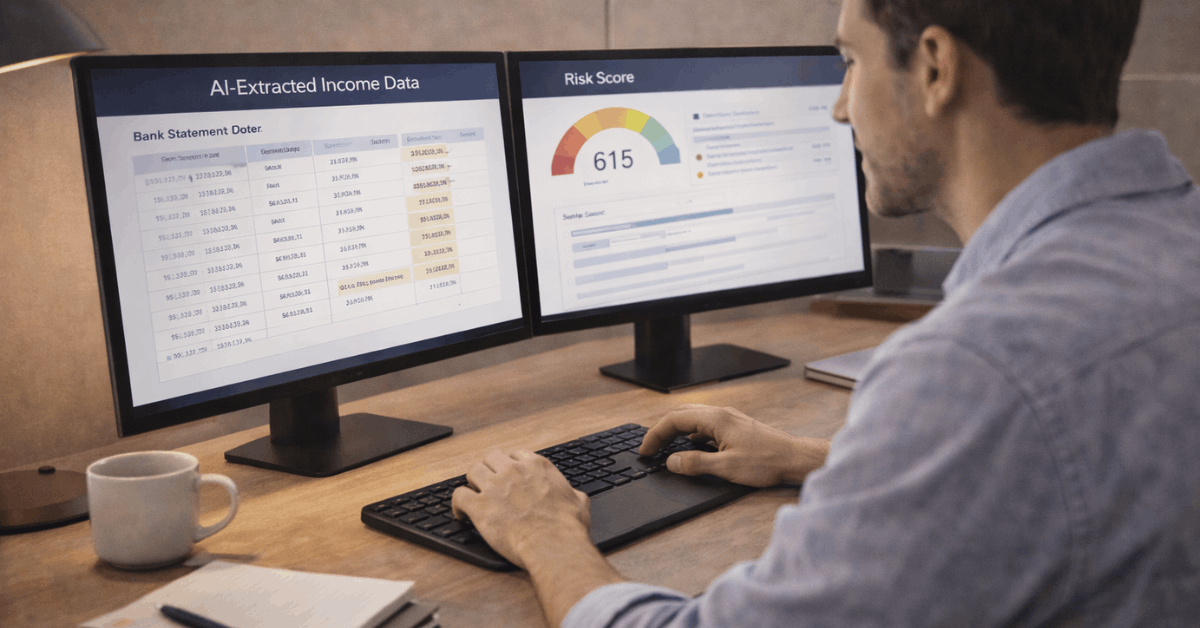
A modern AI eligibility check blends two jobs: data verification and risk prediction. Verification means the system tries to confirm identity, income signals, and document consistency. Prediction means the system estimates repayment risk using patterns learned from past lending outcomes.
Credit history still matters, yet AI often adds layers that manual reviews miss at scale. Salary cadence, cash-flow stability, recurring bills, and spending volatility can reshape the decision. Experian, for example, positions AI as a way to improve real-time decisions and strengthen fraud detection across identity and lending workflows.
Hard rules still exist, since lenders must stay inside policy and regulation. AI doesn’t remove that. Instead, it reduces guesswork and speeds up the decision-making pipeline.
Data Points AI Uses To Estimate Eligibility
Lenders rarely rely on a single input anymore, and AI makes multi-input scoring practical. Expect a mix of traditional and non-traditional signals, depending on the lender, country, and product.
Alternative Data
Alternative data often shows up in markets where bureau coverage is uneven or where applicants have limited borrowing history.
Tools such as CredoLab and LenddoEFL market device and behavioral signals as a way to score risk using consent-based digital and behavioral patterns, rather than relying purely on a bureau file.
That approach is commonly positioned as a financial inclusion lever for underbanked borrowers, though acceptance varies a lot across lenders and regions.
Debt-To-Income Ratio
Core financial math still sits underneath everything. The debt-to-income ratio remains a central filter in many personal-loan and mortgage decisions, and AI can calculate it using verified obligations rather than self-reported estimates.
Several lender guides keep a common threshold range in view, often targeting total monthly repayments around 40% to 50% of monthly income, though internal policy and local regulation can shift that number.
How AI Turns Your Inputs Into A Decision
Models differ, yet the basic flow is consistent:
- collect signals,
- validate documents,
- score risk, then
- map risk to a policy outcome.
Many platforms describe using common predictive methods such as logistic regression, random forest, and gradient-boosted models like XGBoost.
Bank statement analysis is one of the fastest accelerators in that pipeline. Ocrolus, for instance, focuses on extracting and analyzing data from bank statements, pay stubs, and tax forms for underwriting workflows. That type of automation reduces manual data entry and catches inconsistencies earlier, especially when multiple accounts and income streams are involved.
Document-based systems also support fraud detection. Pattern anomalies, mismatched identity data, suspicious document edits, and unrealistic cash-flow claims are easier to flag when the review is systematic and repeatable.
AI Tools People Run Into Most Often
Tool names can blur together because many operate behind the scenes for lenders. A few have strong brand visibility, though, and they map cleanly to typical borrower situations.
- Zest AI is widely used in lender underwriting, and company materials and partner announcements have described outcomes such as higher approval rates and fewer defaults after model adoption.
- Upstart is known for a consumer-facing funnel in several markets and describes using additional variables beyond a classic score, including employment and education factors, while also noting that education is not a requirement for eligibility.
- Scienaptic markets its “Ether” underwriting and decisioning approach for lenders.
- Experian’s decisioning and fraud tooling is often positioned as a layer that combines bureau-scale data with AI-driven risk and identity controls.
Some tools are more specialized.
- LoanBeam is often discussed around income calculation support for complex tax returns, making it relevant for a self-employed borrower whose income is harder to interpret from payslips alone.
- Glib.ai positions its document automation around financial statement analysis for merchant and business risk, including multilingual statement processing.
A Practical Way To Check Eligibility Without Making A Mess
AI-based eligibility checks feel easy, so it’s tempting to run five applications in a night. That can backfire if those checks trigger hard inquiries. Pre-checks are safer when they run as a soft credit check, then convert to a hard inquiry only after offer selection.
Airtel’s personal-loan content in India has cited CIBIL-related messaging that links multiple enquiries with rejection risk, including a “nearly 32%” figure tied to repeated application behavior.
Regardless of the exact number in a given country, the pattern is familiar worldwide: rapid-fire applications can make a profile look distressed. A cleaner approach keeps the process controlled:
- Gather stable documents first, especially recent bank statements, proof of income, and identity documents.
- Use pre-qualification flows that indicate a soft credit check, then pause and compare offers.
- Move to a full application only after terms, fees, and repayment schedules are fully understood.
- Recheck affordability using total monthly obligations, not gut feel.
Investopedia’s explanation of pre-qualification aligns with this logic: pre-qualifying typically uses a soft inquiry and does not guarantee final approval once full verification begins.

What Improves Results In AI-Based Decisions
Small cleanups can move an eligibility outcome from “unclear” to “approvable,” especially when AI is reading behavior patterns rather than a single score. Consistency tends to matter more than perfection.
Income clarity helps. Stable salary credits in a primary account look cleaner than fragmented deposits spread across multiple accounts. Debt management helps as well, since repayment stress is one of the strongest default predictors across products and regions.
Digital behavior can matter in alternative-data scoring environments. Regular utility payments, consistent mobile payments, and stable transaction rhythms can support a profile when a bureau file is thin. That doesn’t mean “more data equals approval,” yet it can reduce uncertainty in the model.
What To Watch Out For
An instant loan decision is still a debt contract, and fast approval can tempt over-borrowing. Fees, insurance add-ons, early repayment rules, and penalty structures deserve a slow read, even when the app experience feels frictionless.
Many vendors market AI as “reducing bias” by replacing subjective manual decisions, yet outcomes still depend on training data, policy rules, and compliance design. Fair-lending expectations differ by jurisdiction, and strong lenders typically pair automation with governance, audit trails, and human review for edge cases.
Alternative data models may rely on device or behavioral signals, which can be sensitive even when presented as non-PII or consent-based. Consent screens and data-sharing scopes matter, especially when a marketplace connects multiple lenders.
Last Thoughts
Loan Eligibility with AI Analysis can make borrowing feel cleaner because it replaces guesswork with structured signals, faster document checks, and clearer yes-or-no pathways.
The upside is real when pre-qualification stays soft, and the lender’s model is paired with sensible policy rules.
Still, the decision is always probabilistic, not personal, and speed doesn’t reduce the cost of a bad loan. Keep control by limiting full applications, reading fees, and repayment terms slowly, and treating privacy consent as part of the price of entry, not a formality.