
An AI Personality Test in 2026 rarely looks like the old “pick an option” quiz. Modern tools can score patterns in language, choices, pacing, and sometimes audio, then translate that into something practical: strengths, blind spots, communication habits, and realistic growth moves.
Results can feel surprisingly specific, yet accuracy still depends on data quality, model design, and how honest answers reflect real behavior.
Personality testing also has a new job in the AI era. Generic prompts create generic outputs, so clarity about voice, preferences, and decision style now matters for career positioning, leadership, and even how teams collaborate.
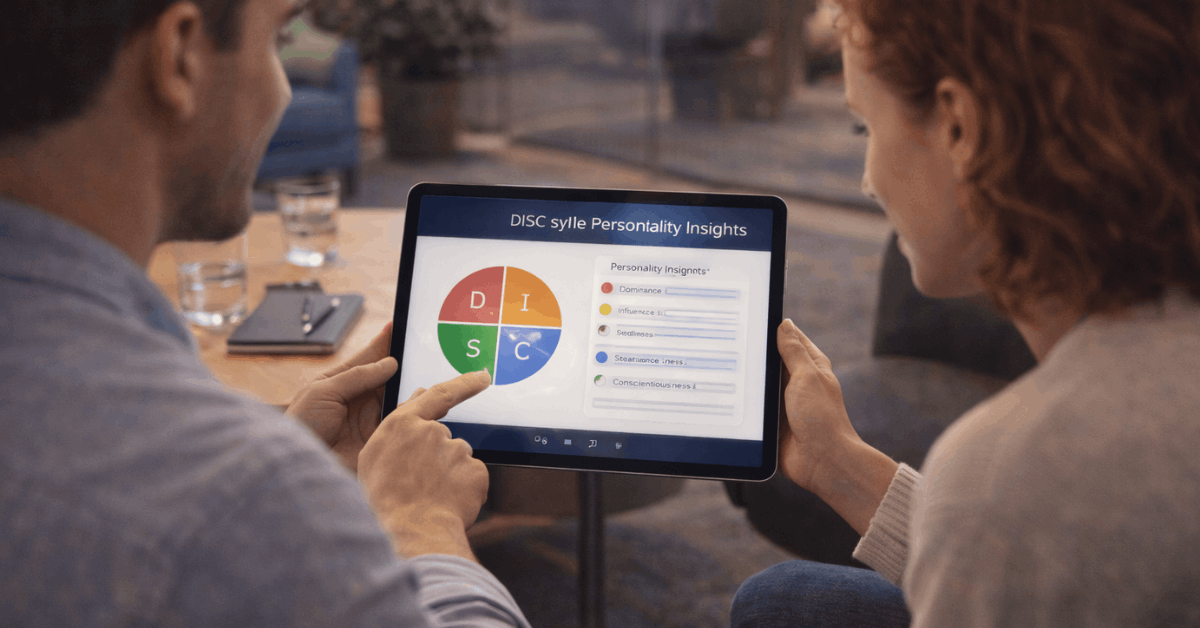
What An AI Personality Test Actually Does
Classic tests rely on self-report, which means the outcome often reflects self-image as much as real habits. AI-driven tools still use self-report, but many add behavioral pattern analysis that looks for consistency, tradeoffs, and how answers relate across frameworks.
Some platforms also infer traits from work artifacts or public profiles. Crystal, for example, positions itself around personality insights for workplace communication and can generate predictions from professional data, then map it to a DISC-style profile used for collaboration conversations.
The value is not fortune-telling. The value is speed, clarity, and a format that makes it easier to act on what shows up.
What Modern AI Tests Measure
AI assessments tend to land in a few measurement styles, and the “best” option depends on the reason for taking it.
Trait and Type Frameworks Still Dominate
Most mainstream products anchor results in familiar models because they’re easier to explain and compare. Big Five and MBTI remain common foundations, often blended with other lenses.
Big Five traits typically include openness, conscientiousness, extraversion, agreeableness, and neuroticism. Many psychologists favor Big Five for trait research because it’s built around broad dimensions rather than a single label.
A typical MBTI personality type report leans more narrative and preference-based, which makes it popular for workplace reflection, even though debate about its psychometric rigor never fully disappears.
Behavior and Context Get More Attention
A strong AI output avoids “one label explains everything.” Better tools connect personality signals to situations: conflict, feedback, planning, risk, routines, and decision speed.
That context layer is where AI can help. A manager might look decisive in a calm setting and overly controlling under stress, and a single static score rarely captures that nuance.
Best AI Personality Tests To Try In 2026
A lot of tools claim “deep insight,” so it helps to separate them by method and use case.
Listen Labs
Listen Labs markets itself as an AI personality test that can generate a profile in under five minutes using a short voice interaction rather than a long survey. That format effectively turns it into a voice-based personality test, which can feel more natural than ticking boxes.
Reported outputs commonly map to Big Five style traits, then expand into interpretation and recommendations. Voice analysis also raises privacy questions, so the consent flow and data retention policy deserve attention before uploading anything personal.
Apt AI
Apt’s positioning leans toward integration: MBTI, Big Five, and Enneagram in one run, then an AI layer that looks for correlations across frameworks. That approach often feels more grounded than a single label, since conflicting signals get explained instead of ignored.
Apt also fits people who want direction, since its ecosystem is tied to career recommendations. For anyone aiming to connect personality patterns to role fit, it functions well as an AI career assessment rather than a casual self-quiz.
Crystal
Crystal focuses heavily on workplace communication, and its DISC framing is built for action: how to talk to someone, how to persuade, how to collaborate, and what friction points tend to show up.
That’s why DISC communication style outputs often feel immediately useful for sales, recruiting, and networking. Crystal also distinguishes between “assessed” profiles and AI-predicted profiles, which matters when making decisions based on the output.
16Personalities
16Personalities remains one of the most widely used type tests online, built around a 16-type model and long-form explanations. The draw is clarity: a person gets a readable profile that can be shared and discussed.
Its best use is reflection and a shared language for differences, not clinical labeling. Team discussions often improve when the profile becomes a conversation tool rather than a verdict.
Hey Compono
Compono’s “work personality” framing emphasizes archetypes like “Pioneer,” plus collaboration tips and blind spots tied to team performance. This is less about identity and more about how work gets done.
For managers and HR teams, the appeal is team personality insights that translate quickly into hiring, onboarding, and collaboration routines.
Quick Experiment: Ask A Chatbot For A Profile Draft
A fast, free experiment can complement a validated assessment, especially for people who use a chatbot frequently and have given it enough context over time. Results can still be wrong, and the output is only as good as the data the model has seen.
A prompt like the one below can generate a useful “draft profile” across multiple frameworks. Treat it as a starting point, then compare it to a real assessment.
“Based on everything that you know about me, provide me with an analysis of my personality profile, based on Myers-Briggs (MBTI), Strength Deployment Indicator (SDI) (in both normal and stress conditions), and CliftonStrengths. For each, provide a brief summary of what you think my profile is and why, plus between 1 and 3 points about the positive things I should build on, and 1 to 3 points about the things I need to work on or look out for, in order to mitigate weaknesses or challenges with my profile.”
Once you have written this, finish with a brief summary of what I should take away from this and recommendations to set me up for success this year.
A realistic output often looks like this: an estimated type, a short “why,” strengths to build on, watch-outs, then action steps. Treat the “why” section as the most important part, since it reveals what evidence the model is using.

How To Pick The Right Test For Your Goal
Clarity improves when the selection matches the reason for taking the test. Mixing goals tends to create confusion, since a “self-discovery” tool and a “workplace communication” tool optimize for different outcomes.
- Career direction and role fit: Apt AI or a validated Big Five test plus coaching notes.
- Communication and collaboration: Crystal or Compono’s work-personality framework.
- Deep self-insight with a novel method: Listen Labs, assuming audio consent feels acceptable.
- Hiring and high-volume screening: platforms like TestGorilla or Vervoe, used ethically and paired with interviews.
Hiring use deserves extra care. The business press has reported a measurable rise in employers using personality and aptitude assessments amid the AI-heavy application surge, making transparency and fairness more important than clever scoring.
Privacy, Bias, and Validity Checks
AI personality tools can be helpful, yet the failure modes are predictable. Overconfidence, shaky data, and unclear consent can turn a “self-awareness” moment into bad decisions.
Privacy starts with privacy and data consent. Voice recordings, chat histories, and scraped profile data all carry risk, especially if retention rules are vague. Personal or workplace decisions should never rely on a tool that can’t explain what it stores and why.
Bias also shows up in subtle ways. Language models can associate certain word styles with traits, even when those styles reflect culture, education, or role expectations rather than personality. Research on personality signals in language exists, yet model outputs still need skepticism.
Validity is the final gate. A credible assessment explains its model, shows how results are derived, and avoids medical-sounding claims. Big Five instruments with published validation standards remain a safer anchor for “true profile” work than untested novelty quizzes.
Turning Results Into Growth, Not Labels
A personality profile becomes useful when it changes choices. One practical move: translate traits into operating rules, such as how decisions get made, how conflict gets handled, and what “good collaboration” looks like.
Another move: share a short summary with trusted people, then ask what matches and what feels off. That feedback loop keeps the profile grounded in reality, not in a flattering narrative.
Final reality check: an AI Personality Test can speed up insight, yet it cannot replace reflection, lived behavior, and consistent action. Treat results as a map, then verify the terrain.
Last Thoughts
An AI Personality Test can give faster clarity than a traditional quiz, yet the best results come from treating it as guidance, not a verdict.
Pick a tool that matches the goal, check how it handles privacy, and look for outputs that explain the “why,” not only the label.
Pair the profile with real feedback from work and relationships, then turn the takeaways into small, specific habits around communication, decision-making, and stress. That’s the point in 2026: less identity collecting, more practical self-awareness that holds up in real situations.