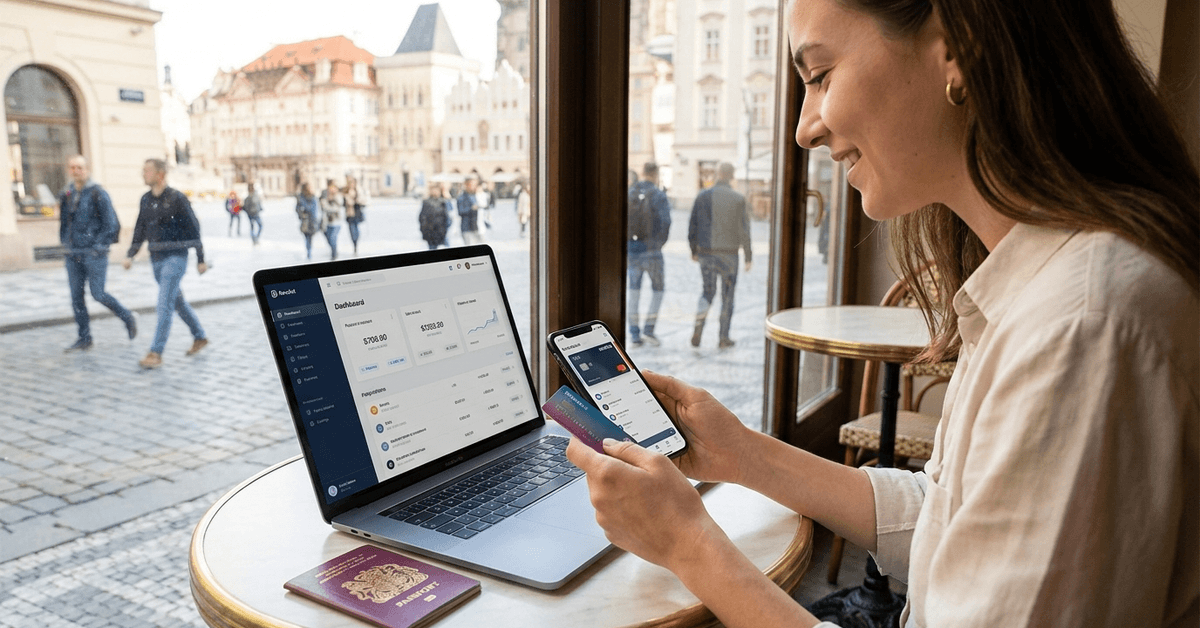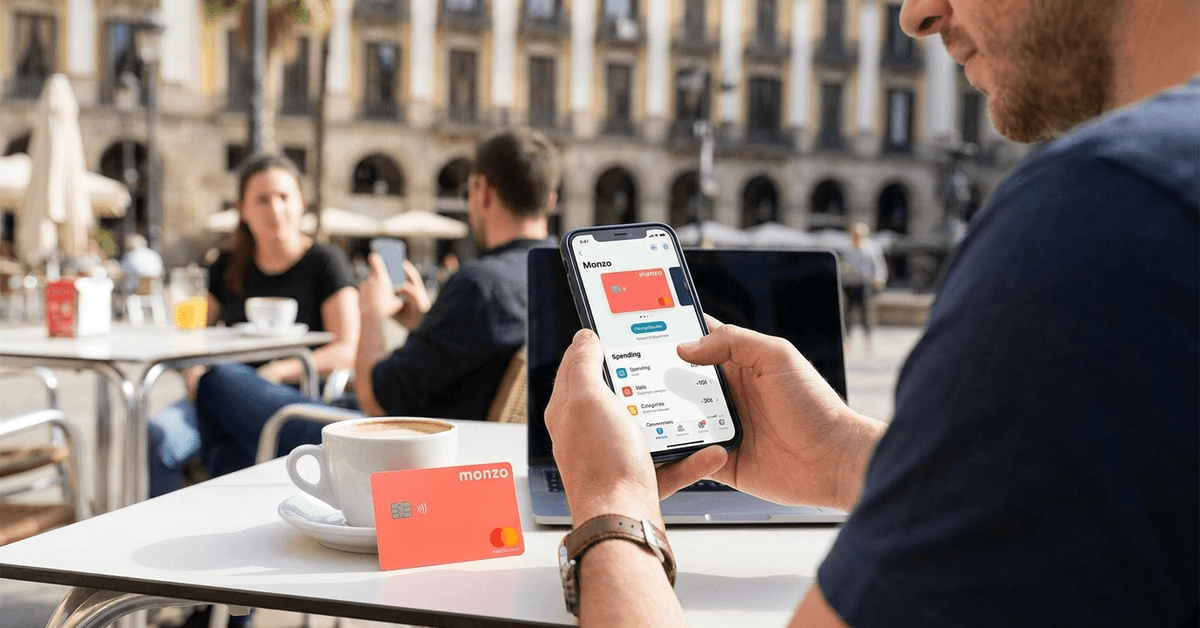
The week after landing in Spain, banking becomes urgent. Rent is due, clients need a place to send payments, and the NIE appointment is three weeks out.
That gap between arrival and paperwork is where a Zolve bank account gets interesting. It targets the exact window when traditional banks won’t touch a newcomer.
But I think the rush to go fully digital-first has a cost that nobody prices in. And it shows up months later, in ways a zero-fee promise can’t fix. So if you’re a freelancer or remote worker relocating to Spain in 2026, this is the breakdown that matters before you choose.
The Documentation Wall That Hits When Landing in Spain
Every newcomer to Spain runs into the same bottleneck in the first 30 days. The banks want documents that take weeks to get, and the documents require steps that need a bank account. It’s circular, and it’s maddening.

Spanish banks like CaixaBank, BBVA, and Santander typically ask for an NIE (Número de Identidad de Extranjero), proof of a local address, and sometimes an employment contract or autónomo registration.
None of those exist on day one for a freelancer who just stepped off a plane.
What Spanish Banks Require vs. What Newcomers Have
The mismatch is specific. A freelancer relocating from, say, the U.S. or India arrives with a passport, a visa (maybe a digital nomad visa), and a foreign bank account. That’s it.
CaixaBank’s onboarding process, for example, requires an in-branch visit. BBVA has improved its digital onboarding for residents, but the NIE requirement still blocks most newcomers cold.
Santander’s process sits somewhere in between, sometimes accepting a passport alone at certain branches, sometimes not.
A Zolve bank account skips this entirely. The sign-up asks for a passport, a visa, and sometimes a foreign address. No NIE. No Spanish proof of residence. No branch visit.
I would pick Zolve over a BBVA attempt during week one purely because BBVA’s NIE requirement adds a 2-to-4-week delay before a freelancer can receive client payments. That delay has a real cost.
The Digital Nomad Visa Angle
Spain’s digital nomad visa, introduced in 2023, created a new category of resident who earns entirely from foreign clients.
These visa holders often don’t have a Spanish employer, don’t receive a local payslip, and may not sign a long-term rental lease immediately.
Traditional banks weren’t built for this profile. Zolve was. The account works for someone who earns in USD, lives in euros, and needs to move money between both without waiting for bureaucratic clearance.
How the Zolve Bank Account Sign-Up Process Works
The process is short, and it happens on a phone. No appointment scheduling, no ticket numbers, no waiting room.
A typical sign-up looks like this:
- Download the Zolve app or visit zolve.com and start registration
- Enter personal details: name, nationality, contact information
- Upload a passport photo and visa documentation (a foreign address works if no Spanish one exists yet)
- Wait for verification, which ranges from instant approval to about 48 hours for manual review
- Once approved, the account is live and a virtual debit card is available immediately
A physical card can be ordered after approval. The virtual card works for online payments and some contactless terminals right away.
One thing to double-check before starting: whether Zolve currently supports applicants from your specific country of origin. Coverage has expanded over the past year, but it’s not universal.
Fees, Cards, and Multi-Currency: Zolve vs Traditional Spanish Banks
The fee comparison is where the Zolve pitch sounds strongest. But the numbers deserve a closer look than the marketing gives them.
Monthly Maintenance Fees
Zolve charges zero monthly fees on standard accounts. Traditional Spanish banks charge between €5 and €12 per month for maintenance, depending on the institution and account tier. That’s €60 to €144 per year just to hold an account.
On paper, the Zolve number wins.
But those traditional bank fees often bundle services: direct debit setup for utilities, a Spanish IBAN that landlords and the tax authority prefer, and eligibility for credit products like mortgages down the line. Zolve’s zero doesn’t include any of that.
Currency Conversion and Transfer Costs
Zolve supports multi-currency balances, which means a freelancer invoicing in USD can hold dollars and convert to euros when the rate looks favorable. Traditional Spanish banks rarely offer this.
A euro-only account at BBVA means every incoming USD payment gets converted at whatever rate the bank sets that day, plus a markup.
Still, Zolve’s exchange rates aren’t interbank rates. There’s a spread, and it varies by currency pair. Testing a small transfer first is a smart move before routing a full client invoice through the platform.
ATM and Card Fees
The international debit card works on major networks. ATM withdrawals in Spain generally work fine, though some ATMs (especially Euronet machines in tourist areas) charge their own surcharges regardless of what Zolve charges.
| Feature | Zolve | Traditional Spanish Banks |
|---|---|---|
| Monthly fee | €0 | €5 to €12 |
| NIE required | No | Usually yes |
| Multi-currency | Supported | Rare |
| Card type | Virtual + physical, international | Physical, often needs local address |
| App language | Multilingual | Mostly Spanish |
The gap is widest for someone who needs to bank right now and earns in a non-euro currency.
Where Zolve Falls Short for Long-Term Residents
This is the part that gets glossed over in every fintech comparison, and I think it costs people real money 6 months down the line.
The IBAN Problem
I would push back on the advice to “just use Zolve and skip traditional banks” because a non-Spanish IBAN creates friction with landlords, the Agencia Tributaria (Spain’s tax authority), and utility companies.
My take on this is specific: a freelancer filing quarterly autónomo taxes through Modelo 130 at the Agencia Tributaria will find that a Spanish IBAN makes the direct debit setup straightforward, while a foreign IBAN complicates it or gets rejected entirely.
Landlords, too, often insist on receiving rent via a Spanish bank transfer. Some won’t sign a rental contract without seeing a local bank account. The zero-fee digital account suddenly has a hidden cost: it can’t do the one thing the freelancer needs most after month two.
Deposit Insurance and Partner Bank Details
Every digital bank holds customer funds somewhere. Zolve works through a partner banking arrangement, and the deposit protection depends on which institution holds the money and under which country’s regulations.
The FDIC in the U.S. covers up to $250,000 per depositor at insured banks. Spain’s Fondo de Garantía de Depósitos covers €100,000 per depositor at Spanish-licensed institutions.
Zolve’s coverage depends on its current partner bank, and this is worth checking directly on their site before depositing large amounts.
Customer Support When Things Go Wrong
Zolve offers multilingual support through chat and email. For a lost card or a disputed transaction, that’s usually sufficient.
But for complex issues like a frozen account or a compliance hold on an international transfer, fintech support channels tend to move slower than a branch conversation at CaixaBank where an agent can pull up records in person.
Tax and Legal Details for Banking as a Newcomer in Spain
Banking choices and tax obligations overlap in Spain more than newcomers expect. Anyone spending more than 183 days per year in Spain becomes a tax resident and owes Spanish income tax on worldwide earnings.
That includes freelance income paid into a Zolve account, a Wise account, or any other platform, regardless of where the IBAN is registered. Failing to declare foreign-held bank accounts to the Agencia Tributaria can trigger penalties.
Spain’s Modelo 720 requires disclosure of overseas assets exceeding €50,000. A Zolve account, depending on where the funds are held, may fall under this requirement.
Three practical steps for newcomers to keep things clean:
- Register as autónomo (self-employed) through the Seguridad Social once work begins
- Report all foreign accounts if the combined balance exceeds the Modelo 720 threshold
- Keep records of every incoming transfer, conversion, and fee paid through any banking platform
None of this is unique to Zolve. It applies to Wise, Revolut, N26, or any other digital banking tool. But the convenience of a quick sign-up can make newcomers forget that Spanish tax law still applies to every euro earned.
Questions People Ask About Zolve Bank Account in Spain
You might ask these questions along the way:
- Q: Can I use a Zolve bank account to pay rent in Spain?
Transfers from Zolve to a Spanish landlord’s account are technically possible, but some landlords reject non-Spanish IBANs. Checking with the landlord before signing a lease saves trouble later. - Q: Does Zolve work as a primary bank for freelancers in Spain?
It can work well during the first few months when documentation is still in progress. Long-term, pairing it with a local Spanish bank account covers gaps like tax direct debits and local utility payments. - Q: Is the Zolve debit card accepted at all ATMs in Spain?
The card runs on major international networks, so standard bank ATMs (CaixaBank, BBVA, Santander) accept it. Independent ATMs like Euronet may add a surcharge on top of any Zolve fees. - Q: Do I need to declare my Zolve account on Spanish taxes?
If the account is held outside Spain and the balance exceeds the Modelo 720 reporting threshold, yes. A tax advisor familiar with expat situations can clarify whether the current Zolve structure falls under this rule. - Q: How fast can I start receiving payments after opening a Zolve account?
Approval can happen within hours, and the virtual card activates immediately after that. International wire transfers to the account may take 1 to 3 business days depending on the sender’s bank.
Conclusion
A Zolve bank account solves the first-month banking crisis that every newcomer to Spain faces. The zero-fee structure and minimal paperwork make it a practical tool during the documentation gap.
Smart freelancers will treat it as a bridge account while building their full Spanish financial setup. The real move is knowing when Zolve stops being enough and a local IBAN becomes the priority.